
Signature story 05 · Pan-Amazon / Korea / Tanzania
What the land asks of us.
River, tidal flat and soil — three places close enough to change the people who stay with them.
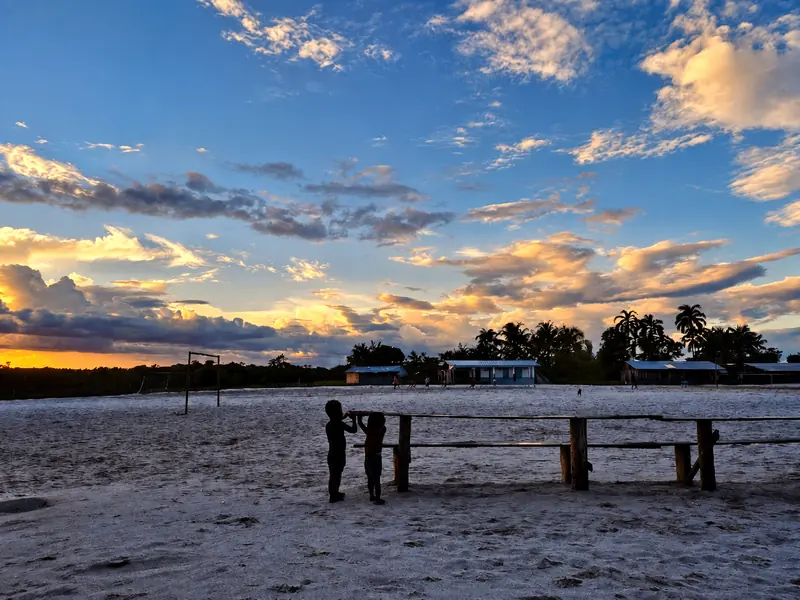
Dusk in a riverside community, Brazilian Amazon. Photograph courtesy of the Equipo Itinerante.
Some places ask more of us than admiration
What happens when care for creation stops being an idea and becomes a place you have entered, a people you know, and a reality you can no longer look away from? In the Amazon, on a Korean tidal flat, and across Tanzanian soils, religious life becomes prophetic by staying close enough to creation to be changed by it.
Some places ask more of us than admiration. For Fray Erick Marín Carballo, that demand begins with a sentence:
“The territory has changed, and I have changed.”
A story that resists being tidy.
Fray Erick returned to the Upper Rio Negro and came back changed by it.
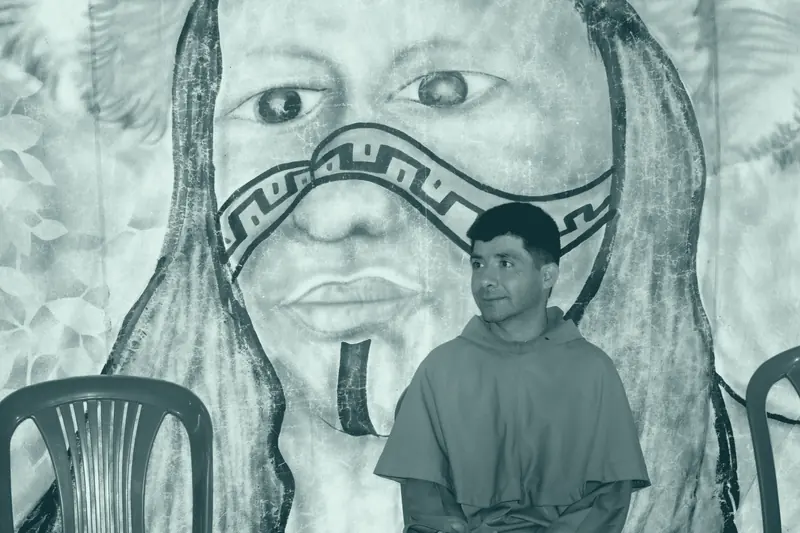
Fray Erick Marín Carballo, Equipo Itinerante, Pan-Amazon region.
When Fray Erick first spoke with the Laudato Si’ Action Platform in 2024, he resisted making the Amazonian story his own. “This story is not only my story,” he told participants in a global webinar on religious life and climate action. He had joined the Equipo Itinerante, an intercongregational group of women and men religious and laypeople who move among communities in the Pan-Amazon region rather than working from one fixed place. He described their task as building relationships: listening to local struggles and connecting them with institutions and organizations capable of accompanying people in their territories.
“The Pan-Amazon region is alive, in constant movement, and always under threat,” he says. “For those of us who are connected to this reality, it is always news, joy, and alarm. But it seems the world remains silent before life that is continually being violated.”
Erick is now based primarily in Costa Rica, but his ministry continues to pull him back toward the Amazon. Over the past two years, he returned for the international climate conference COP30 and, more recently, traveled into the Upper Rio Negro in the Brazilian Amazon, where he spent time with the Yuhupdeh people.
What he encountered there resists a tidy environmental story.
We encountered endless rivers of indescribable beauty, but also older people with serious illnesses and no possibility of receiving dignified care.
He remembers a shared table—fish, cassava flour, hands offering what was available—and also “empty bowls, days without food, extinguished fires.” He remembers deep spirituality and human connection alongside garimpo, mining that he describes as contaminating rivers and “silencing dreams and futures.”
For Erick, those realities belong to the same landscape. The river cannot be separated from the people whose lives unfold along it; ecological destruction cannot be separated from health, hunger, culture or displacement.
“The stories we gather speak of illegal mining,” he said in the 2024 webinar, “of trees that fall before the power of the powerful; of animals without habitat or food; and of many peoples displaced from their ancestral territories.” They spoke of “waters that now taste of mercury,” floods, droughts and migrants carrying dreams despite having no home. But they also spoke of communities protecting turtles, defending rivers, experimenting with renewable energy and living “a deep spirituality connected with creatures and with their cycles.”
Two years later, Erick sounds less like someone describing a ministry and more like someone describing a conversion still underway.
When asked what his religious vocation demands in response, Erick begins not with advocacy, strategy or expertise, but with a single word: fidelity.
Fidelity.
“Fidelity to the Gospel of Jesus,” he says, a fidelity that requires choosing where one stands. It requires leaving behind “the comfort of the person who visits but does not allow himself to be transformed” and crossing toward “other shores—not only geographical ones, but existential ones.”
And sometimes that transformation is unsettling.
All of this troubles me deeply. Sometimes I feel overwhelmed by everything that is happening.
He wonders whether his answers are even answers, or simply “a small piece of the many questions that resonate within me.” What strengthens him is the resistance of the communities themselves, “how celebration and spirituality sustain them,” and the knowledge that others are accompanying them too.
Prophecy, in this telling, has surprisingly little to do with certainty. It begins with staying close enough to a place to be changed by it.
They did not first encounter it in a meeting room.
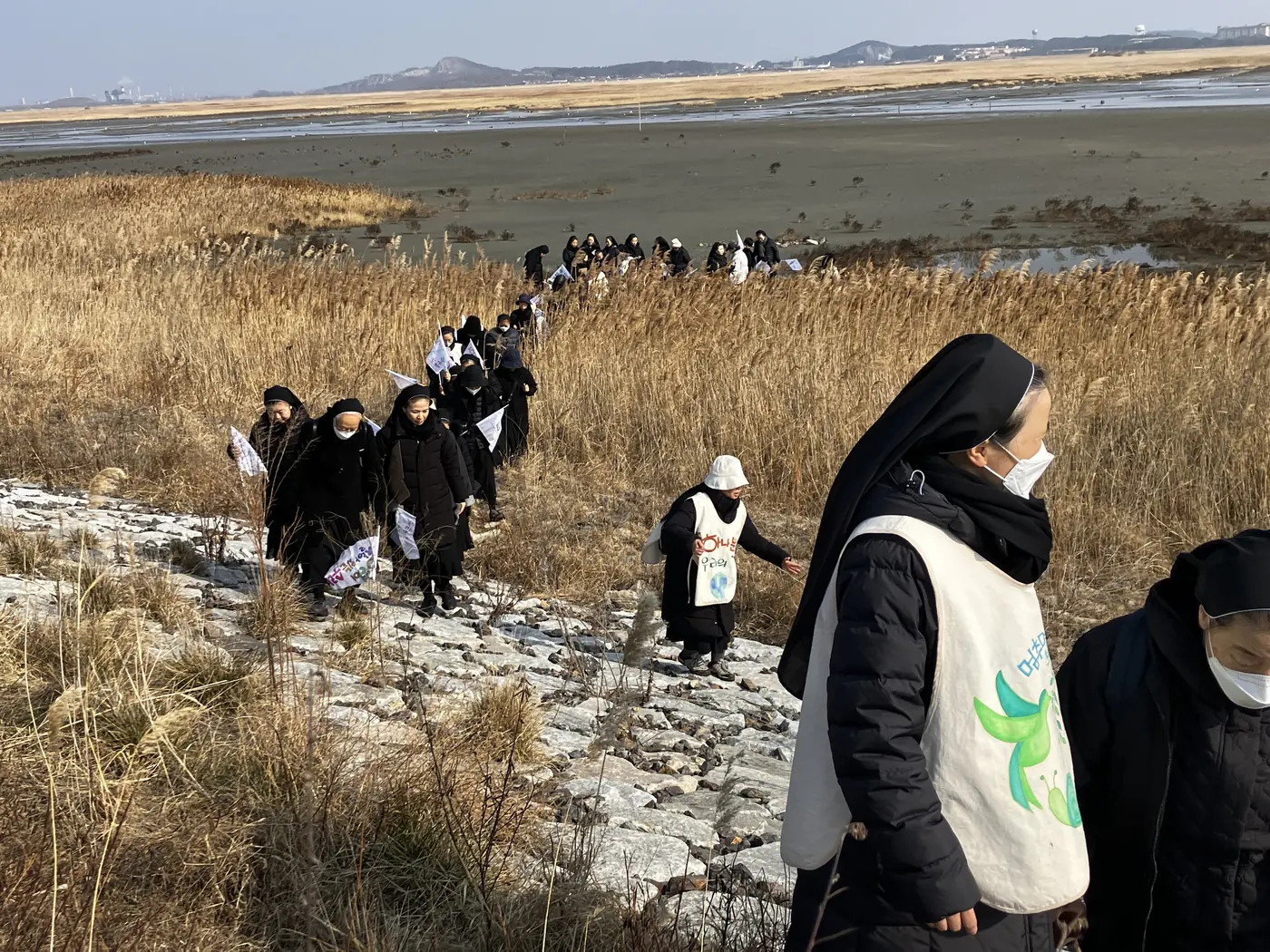
Sisters of Notre Dame and companions on pilgrimage at Sura.
Half a world away, the landscape is almost horizontal.
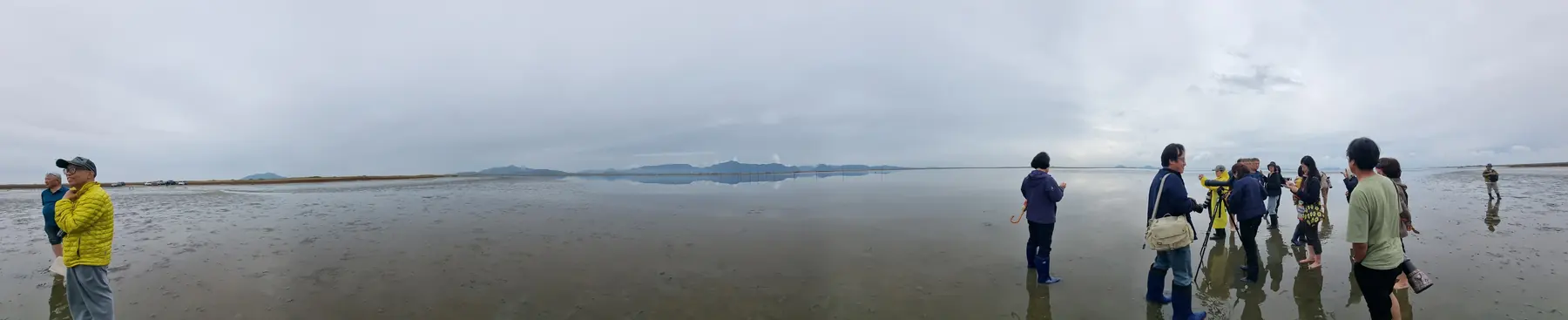
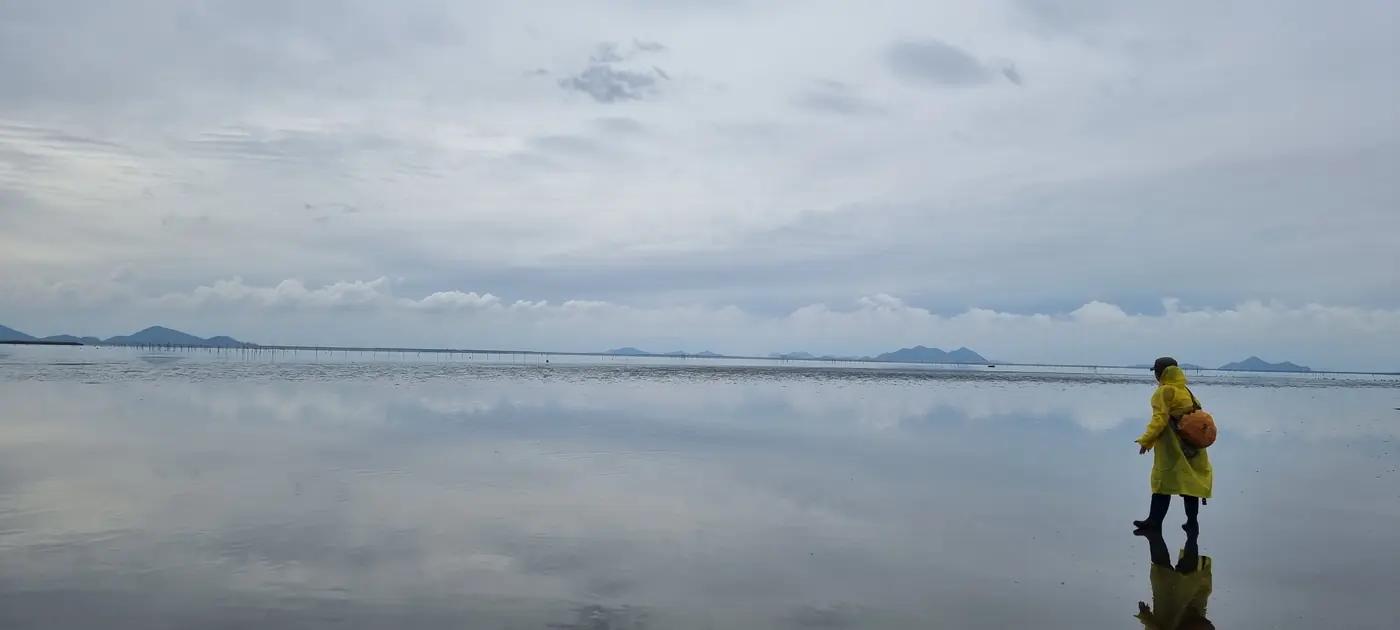
At Sura Gaetbol, sky and water seem to blur into one another. At low tide, people can walk out across mud that only hours earlier belonged to the sea. Migratory birds feed there. Marine life depends upon it. The ecosystem exists because water comes and goes.
Sura is what remains of a much larger tidal-flat landscape altered by the Saemangeum Development Project. Beginning in the 1990s, a 33-kilometer seawall cut enormous stretches of wetland off from the Yellow Sea. Shellfish beds, fish nurseries and feeding grounds for migratory birds were among the ecological systems disrupted as tidal exchange disappeared. Sura, still exposed to development pressures, became a place people were fighting to keep alive.
The Sisters of Notre Dame did not first encounter it in a meeting room.
They walked into it.
“We placed ‘hope’ in our footsteps,” Sr. Marie Carmel recalled of an early pilgrimage. The sisters moved slowly through the wetland, listening and watching. They approached bird habitats carefully, alert to their own presence inside another creature’s home.
The pilgrimage did not end there.
“The more people visited Sura, the more they listened to the diverse life forms there,” the sisters explained in their 2026 follow-up. As people encountered the tidal flat directly, the circle of concern widened beyond environmental organizations and longtime activists.
The sisters began bringing others with them.
They walked Sura with the Justice, Peace and Integrity of Creation committee of Korean women religious. They stood alongside civic activists and encouraged other congregations to visit. They screened a film about the tidal flat, then asked colleagues and collaborators what the story demanded of their own ministries. Schoolchildren sent postcards to the Ministry of Environment. Kindergarten families created songs and dances. Sisters from a welfare center brought coworkers onto the tidal flat itself “to listen to their cries.”
We placed ‘hope’ in our footsteps.
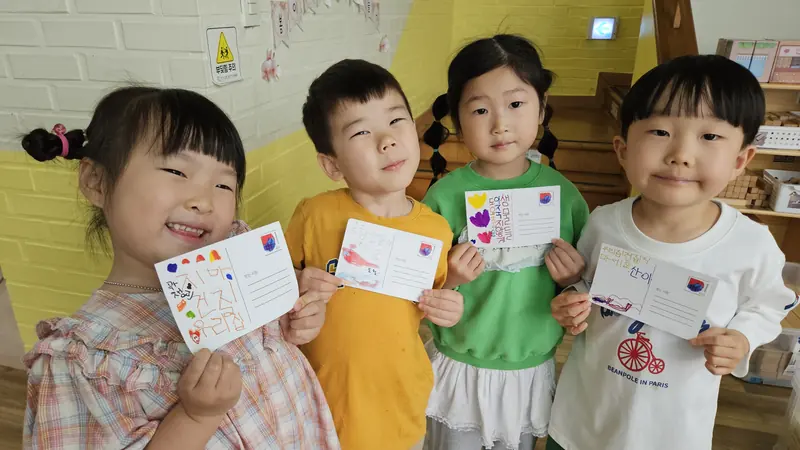
For Sr. Marie Carmel, something else had changed too: the boundary between prayer and public action. “Our Pilgrimage for Life and Peace was a journey that brought our prayers to life in a more concrete way,” the sisters wrote.
“Prayer, solidarity, community life, and the suffering of our Common Home are not separate. Our journey of solidarity for the suffering Earth is itself a prayer.”
The consequences have lasted beyond the first visit.
Through schools, social ministries, screenings, petitions, cultural festivals and continued visits to Sura, the sisters say they are trying to move from what they call “a culture of death” toward “a culture of life.” The changes are not fast. The sisters say government action has remained limited. But they also say more people now understand that protecting Sura is not simply about preserving beautiful scenery, but sustaining a relationship with the ecosystem itself.
Sr. Marie Carmel describes hope here less as optimism than persistence: acting, finding others doing the same, and discovering that solidarity can widen.
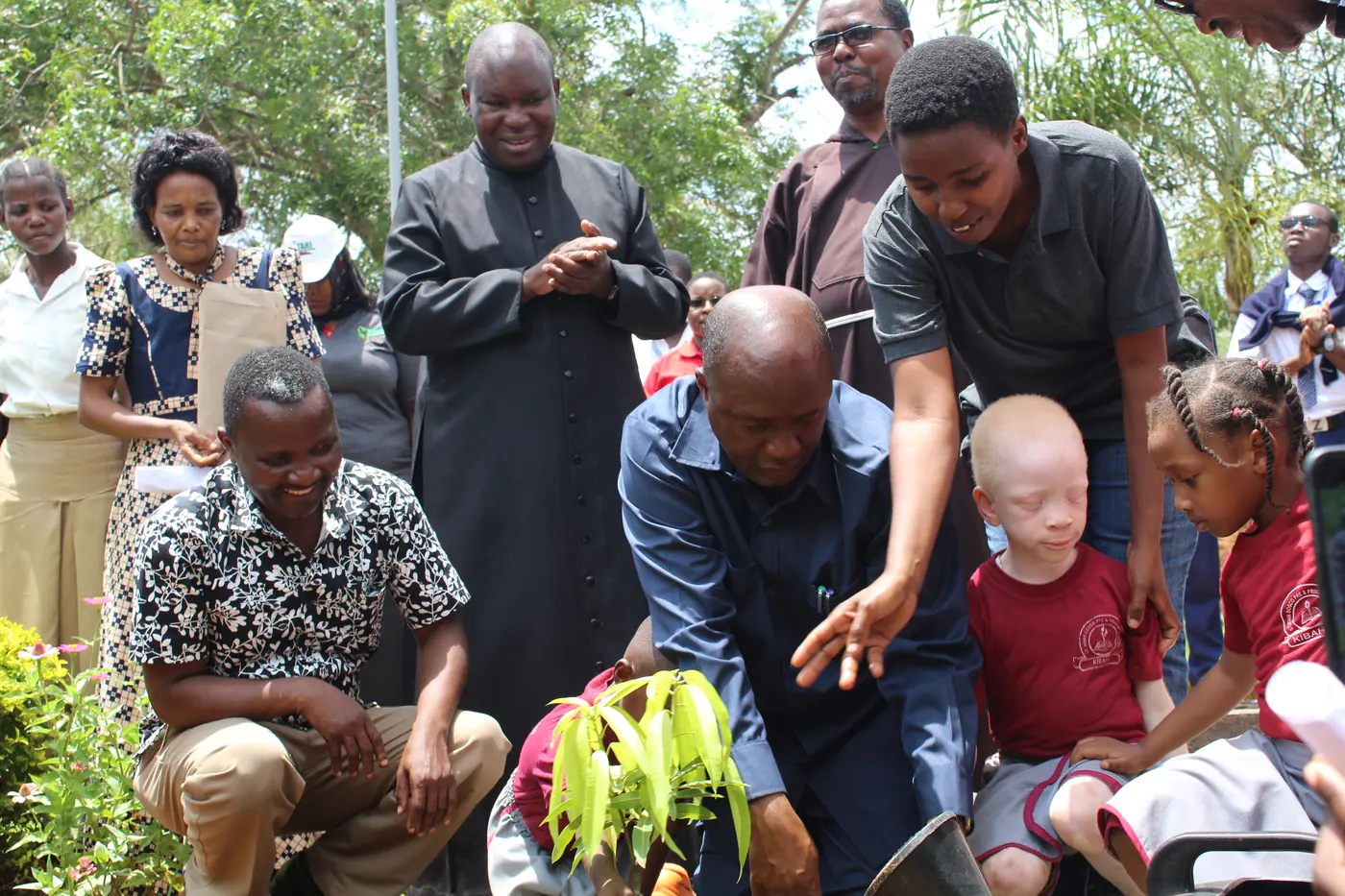
Even a tree becomes complicated once it is planted in real soil.
Birthday Tree Planting campaign, Kibaha, Pwani, Tanzania. Photograph courtesy of TAJPI.
For Br. John Cornel Sulle, OFMCap, the landscape presents another question: what happens when care for land immediately becomes a question about who depends upon it?
Br. John is a Capuchin Franciscan and Executive Director of the A’ray Justice and Peace Initiative, TAJPI, in Tanzania. TAJPI’s work includes tree planting, ecological education, youth engagement, soil restoration and community participation. But he is wary of treating conservation as a category separate from everything around it.
Conservation cannot be separated from justice.
Protecting “trees, land, biodiversity, water, and ecosystems,” he argues, must also mean protecting people whose lives and livelihoods depend upon them. For TAJPI, that has drawn ecological work into questions of women’s land rights, children’s protection, education, civic participation and community empowerment.
Even a tree can become more complicated once it is planted in real soil.
TAJPI’s Birthday Tree Planting initiative began by connecting personal celebrations with responsibility for creation, particularly among young people. But the organization increasingly understood planting not as an isolated environmental gesture but as formation: a way to teach responsibility, build community participation and connect ecological care with everyday life.
Br. John is unusually candid about where this work becomes difficult. “Prophetic advocacy becomes most meaningful when it is tested by reality,” he writes.
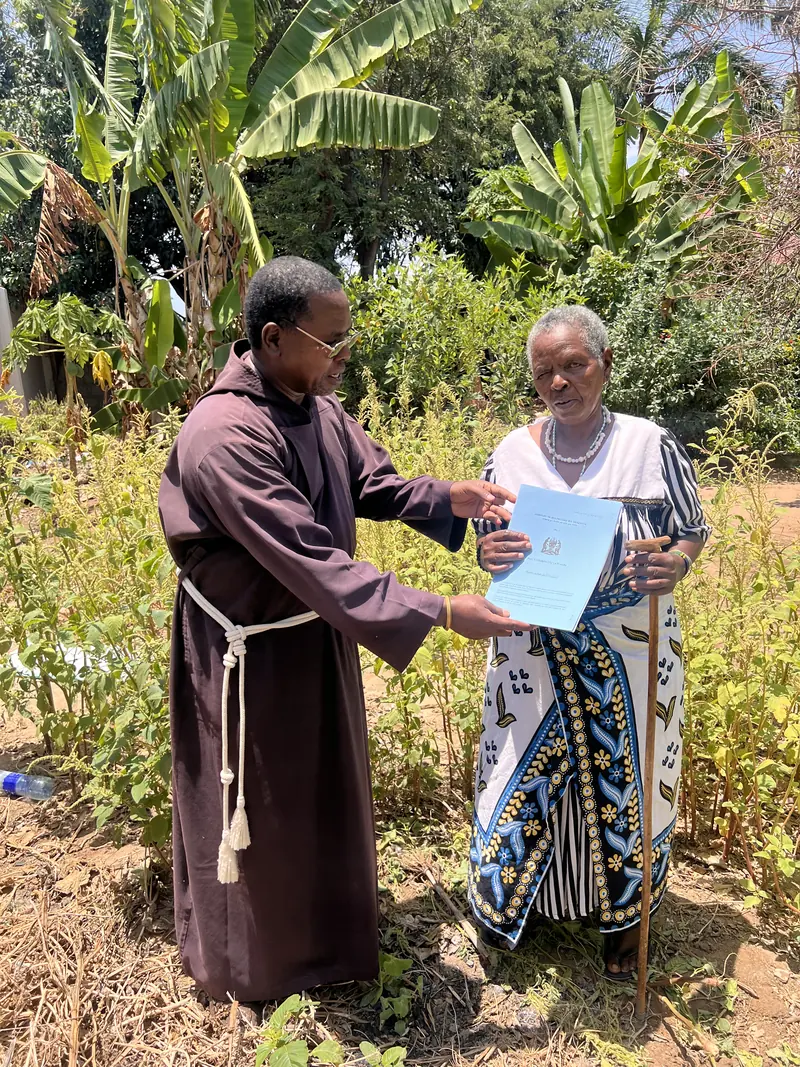
That reality can include environmental protection, land rights, poverty, governance, livelihoods and economic interests colliding with one another. Once that happens, the work becomes slower and less photogenic. It requires, in Br. John’s words, “patience, dialogue, evidence, courage, and long-term accompaniment of communities.”
TAJPI itself knows those limits. Br. John speaks candidly about insufficient financial and human resources and about ecological programs that cannot always be implemented at the scale the organization would want. Yet he draws a line between limitation and retreat.
“Difficulty should not become an excuse for silence.”
Sometimes, he says, prophetic witness means accepting that progress will be gradual “while refusing to abandon the communities and ecological causes entrusted to our care.”
That word—entrusted—changes the timeline. A tree-planting ceremony can take an afternoon. A campaign can produce a photograph. But soil restoration, land rights, ecological education and accountable governance belong to a different timescale. They ask whether institutions remain after the event, after the funding becomes difficult, after public attention moves elsewhere.
Br. John’s definition of prophetic religious life reflects that longer horizon. It means allowing faith to become “a responsible presence among people and within creation.” It means listening, accompanying and speaking when necessary, even without having every answer.
“The task,” he concludes, “is not simply to celebrate five years of action, but to ask what the next five years demand of us.”
For him, the answer is still to keep walking with people, “listening to the Earth and the poor, and turning faith into responsible action for our common home.”
Close enough to listen
When we spoke again in 2026, Fray Erick returned to that same posture. He believes that the people accompanied by him are asking the Church for “a presence that embraces and defends, but that also allows them to continue being who they are.”
“Perhaps,” he says, “they are asking us to take off the shoes of our ideas, preconceptions, and false solutions.” Then he offers an image that could belong equally on a riverbank, a tidal flat or a field:
“They ask us to inhabit their rivers, walk their paths and learn to listen to what seems not to speak.” A tidal flat cannot submit a petition. A river cannot walk into a meeting. Soil cannot explain when it has been asked to carry too much.
But the people whose lives are bound up with these places can tell us what they are seeing. Scientists can document what is changing. Communities can defend what sustains their lives. And religious people can decide whether prayer will keep them at a safe distance—or bring them close enough to listen.
Perhaps that is where the prophetic dimension begins: getting close enough to a place that, once it speaks, we can no longer pretend we did not hear it.
Dusk in a riverside community, Brazilian Amazon. Photograph courtesy of the Equipo Itinerante.
Signature stories · Five years of the Laudato Si’ Action Platform
Keep reading
-
 Rebuilding Our Churches
What does it mean to rebuild a church?
-
 The Same Bottle
What becomes visible when the same ordinary object passes through different hands.
-
 What We Pass On
A family inheritance of faith, land and care.
-
 After Everyone Goes Home
Planting a tree can take minutes. Growing one asks for water, hands, institutions—and sometimes a horizon longer than a human life.
From the Laudato Si’ Action Platform annual report. Celebrate five years with us →