
Signature story 01 · Samoa / Aotearoa New Zealand
What we pass on.
A family inheritance of faith, land and care.
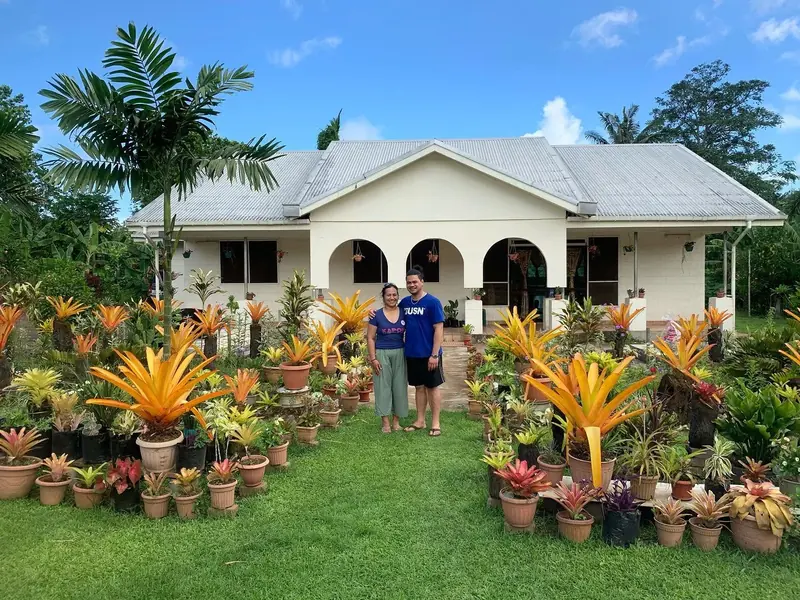
Vanessa Leota with her brother Michael outside their grandparents’ home in Samoa.
Editor’s note
For Vanessa Leota, care for creation was present long before she had language for integral ecology: in Sunday walks through banana trees in Samoa, clothes passed from one child to another, food prepared by familiar hands, prayer gathered around an altar, and the knowledge that what is received is meant to be cared for.
Vanessa Leota is Digital Marketing Lead for Caritas Aotearoa New Zealand and a participant in the Laudato Si’ Action Platform’s Digital Missionaries Bootcamp. For the Platform’s fifth anniversary, we asked her to look back not at a single environmental project, but at the ordinary practices and family life that shaped how she understands care for creation. Her answer begins in Samoa and continues in Aotearoa New Zealand, across grandparents, parents, sons, cousins, gardens and kitchens. What emerges is less a list of sustainable habits than a story about inheritance: the things a family receives, the ways it learns to value them, and what one generation quietly passes to the next.
Long before integral ecology had a name for me, it had a shape.
It was Sunday mornings in Samoa. We woke early, put on our best white and walked through a patch of banana trees, past the Catholic Theological College at Moamoa, to reach the Cathedral. All the children from the four families on our block would walk together. It was always an adventure. We might sing along the way or see who could reach the Cathedral first.
Everyday life was surrounded by things that grew: mango, guava, sugar cane, taro, coconut, pawpaw, breadfruit, yams. Looking back, we were blessed with so much abundance from the Lord’s provision. But there were also shortages, particularly water. There were stretches when we had no running water, so the mums would do the washing together at the river while we played nearby. It never felt like hardship to me. It just seemed like how things were, and as a child I loved whenever we went to the river.
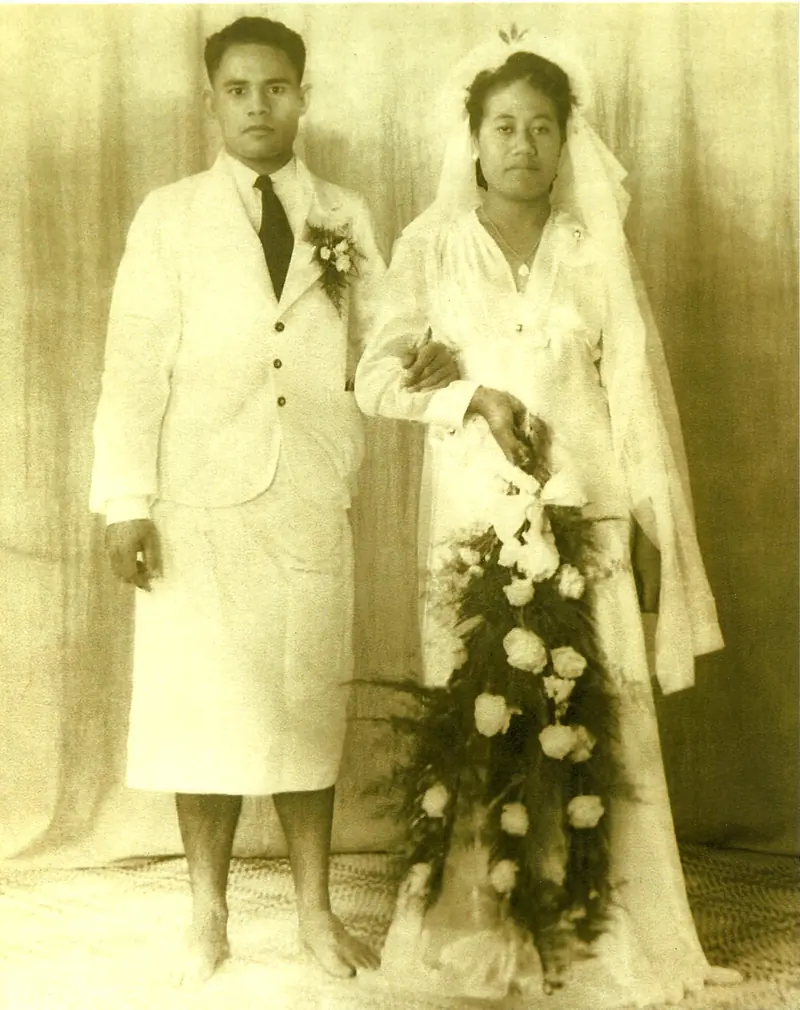
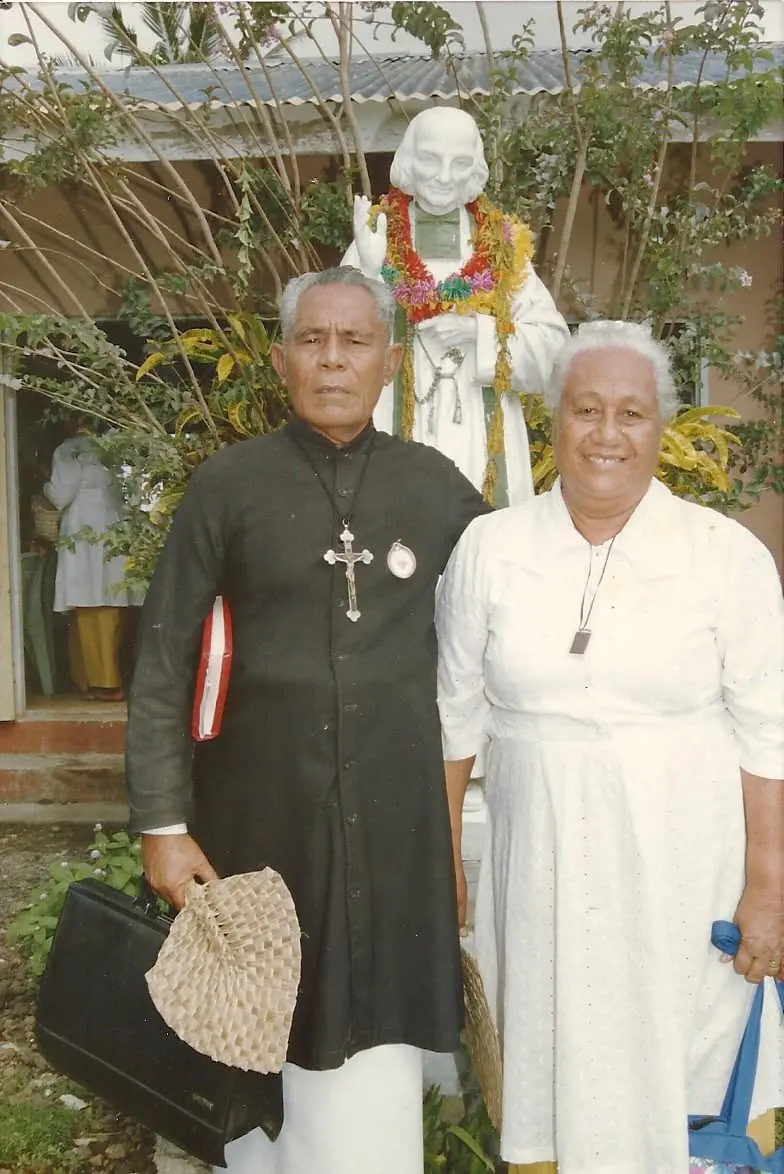
My grandparents, Etuale and Katalina Mauga, were catechists. They had attended the Moamoa Theological College we passed every Sunday. When I stayed with them in one of the villages where they served, I remember dutifully ringing the village bell for the Angelus. I remember Grandma calling the chickens, scattering rice where she wanted them and making her “cooo cooo cooo” sound. Sometimes that call meant something slightly different depending on whether a special meal was coming.
I didn’t know it then, but there was something rewarding and comforting in that simplicity.
Faith, food, land, animals, family—they were not separate parts of life. They were simply life.
Sharing what we already had
Saturdays before we served at Sunday Mass often meant making leis if our family was responsible for the church decorations. We call them ula in Samoan. We would climb the frangipani trees to collect whichever flowers Mum or Grandma wanted: red, yellow or white. Neighbours sometimes came to take flowers from our trees when it was their turn to prepare the church.
In the evenings, Grandma and Grandpa would call everyone inside—all the cousins and whoever happened to be staying with them—to sit in a circle in front of their big altar. We prayed and sang together in island harmony.
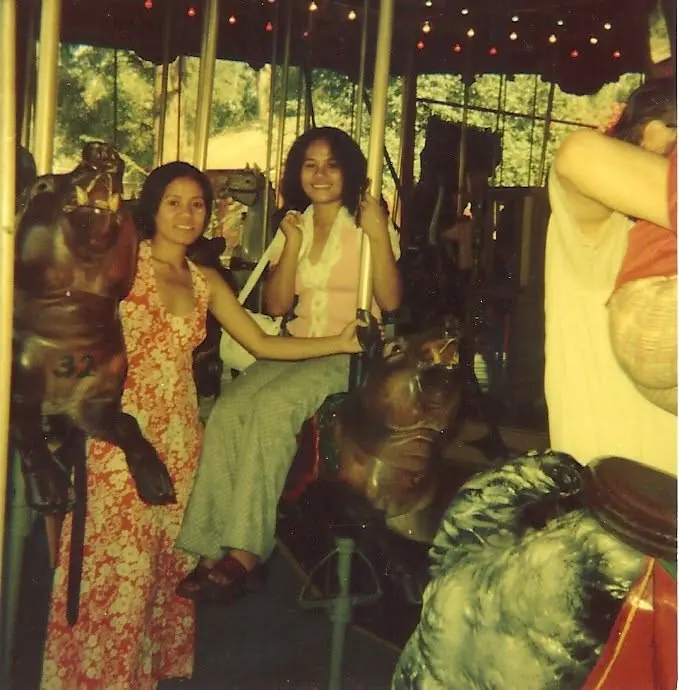
And then there were the clothes. My mum regularly received batches of clothes and shoes from her eldest sister, my Aunty Annie. As a teenager, I eagerly waited for them to become mine. I had no idea I would one day do exactly the same thing.
My eldest son, Harold’s clothes passed through all four of my boys and then continued on to my brother’s family. My nephew Miguel is not much of a talker, but you can see his gratitude in his smile when something that once belonged to his cousins becomes his. Those clothes have already kept someone else warm and dry. Now it is his turn.
What my boys have taught me is mostly something I have watched rather than something they set out to say. None of them grew up seeing a hand-me-down as the lesser option. As my eldest son put it: “The tradition of hand-me-downs was just a way of life for us, and we didn’t mind growing up. It also taught us to be grateful for what we have.”
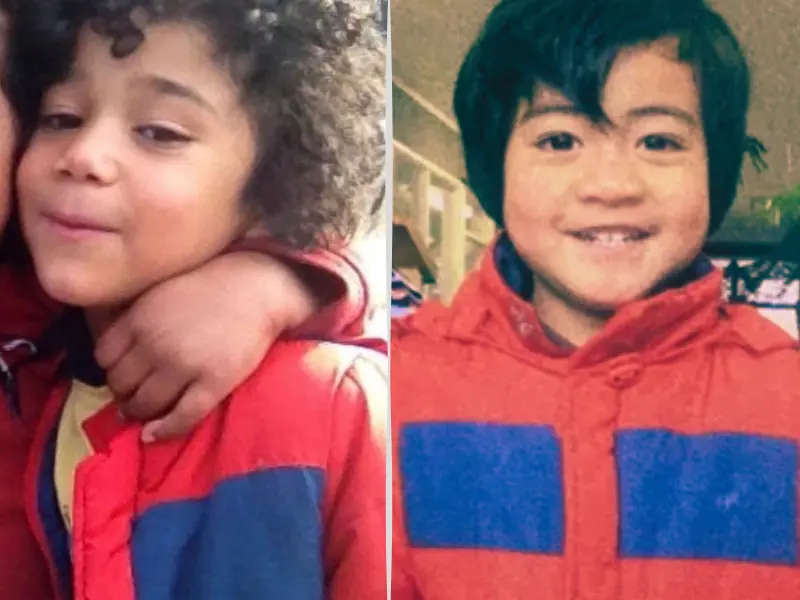
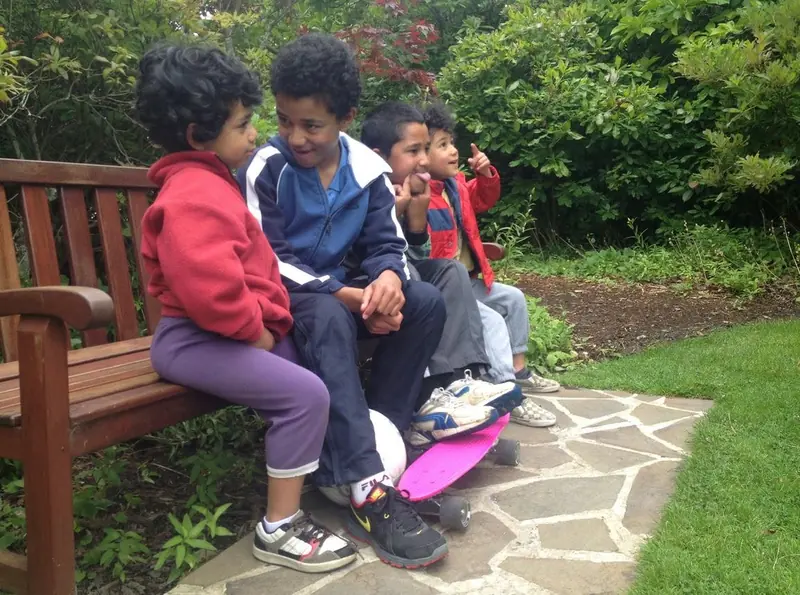
By the time a jacket reached my youngest son, or passed from my boys to my nephew Miguel, it wasn’t reluctant generosity. It was the much-awaited blessing of a loved item that a younger family member had been waiting to receive.
I knew that feeling myself, just as my mother had. I had once waited for my turn too.
What passed from hand to hand
-
Etuale & Katalina Mauga
Catechists. The Angelus bell, and evening prayer in a circle before their altar.
-
Lita & Aunty Annie
Batches of clothes and shoes, sent on by an eldest sister.
-
Vanessa & Michael
Taro prepared the way they were taught.
-
Harold & his brothers
Clothes that passed through all four boys.
-
Miguel
The red jacket. Now it is his turn.
Four generations, as Vanessa Leota tells them.
Knowledge passed from hand to hand
The same thing happens with food.
On a recent trip back to Samoa, I watched my brother teach my eldest son, Harold, how to prepare taro the way I was taught. His hands were learning the same motions my own family’s hands had made before him, while someone nearby prepared coconut cream fresh from the tree.
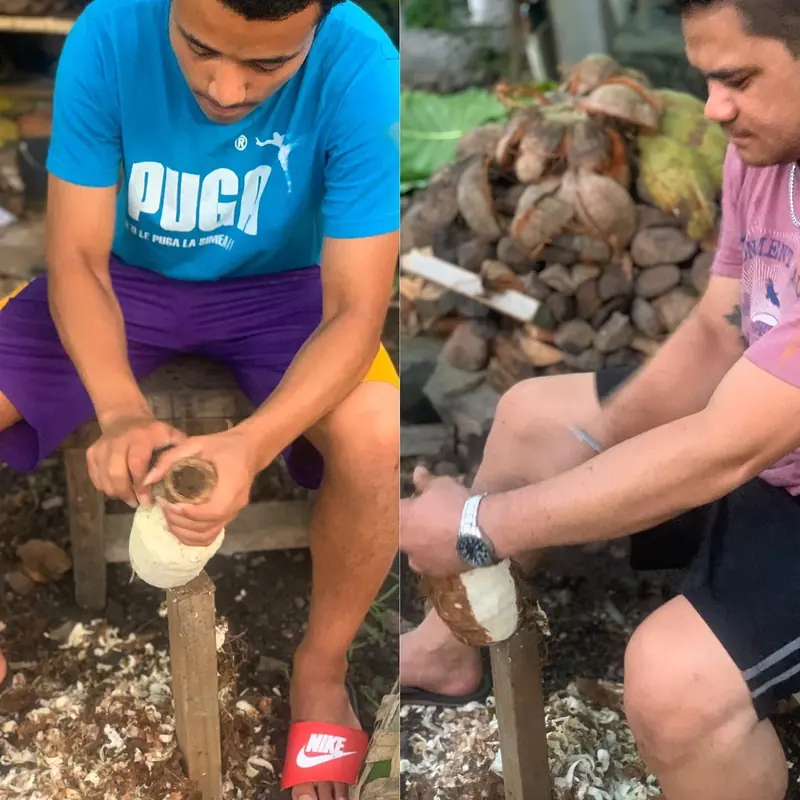
There is something about watching your child learn a movement you remember from your own childhood. It makes you realize that what gets passed down is not always something you can put on a shelf. Sometimes it is a way of using your hands. A way of preparing food. A way of knowing what the land has given you and what to do with it.
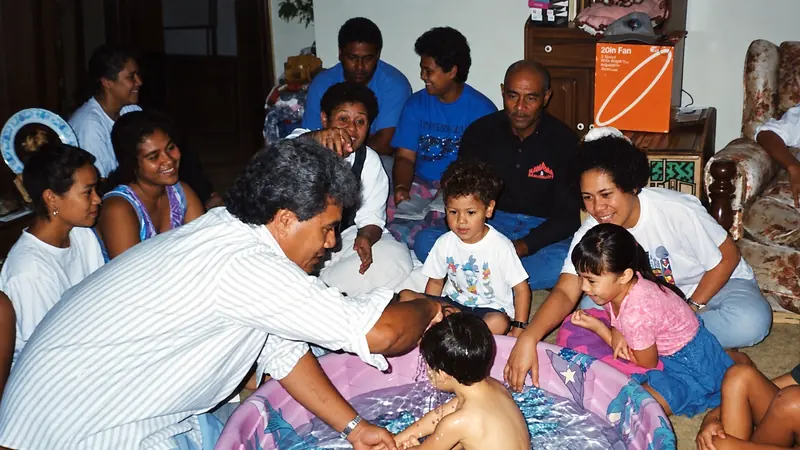
Faith was never separate from those rhythms in our home growing up. There was Sunday Mass, the Angelus bell, evening prayer around Grandma and Grandpa’s altar, and the joy of singing together. At one family reunion, my uncle, the late Monsignor Etuale Etuale, baptized one of my cousins in an inflatable paddling pool in the living room. The whole family stood gathered around in a circle—the same circle we used to make for evening prayer.
Today I live in another country. Aotearoa New Zealand is home now. The banana plantation is no longer on the walk to church, but the worship and thanksgiving remain.
My boys have grown up, and one still lives at home. We continue the tradition of being with our elders when they reach the age when they need a helping hand. Our old Sunday Mass walking crew has become intergenerational. My parents continue their devotion as members of the Legion of Mary. Prayer remains constant for us: the Divine Mercy Chaplet, the Rosary, remembering whom to thank when we wake and before we sleep. Sometimes one of my sons who lives farther away will call me on WhatsApp and ask if we can pray together. I am grateful that they still remember the power of our Creator.
The banana plantation is no longer on the walk to church, but the worship and thanksgiving remain.
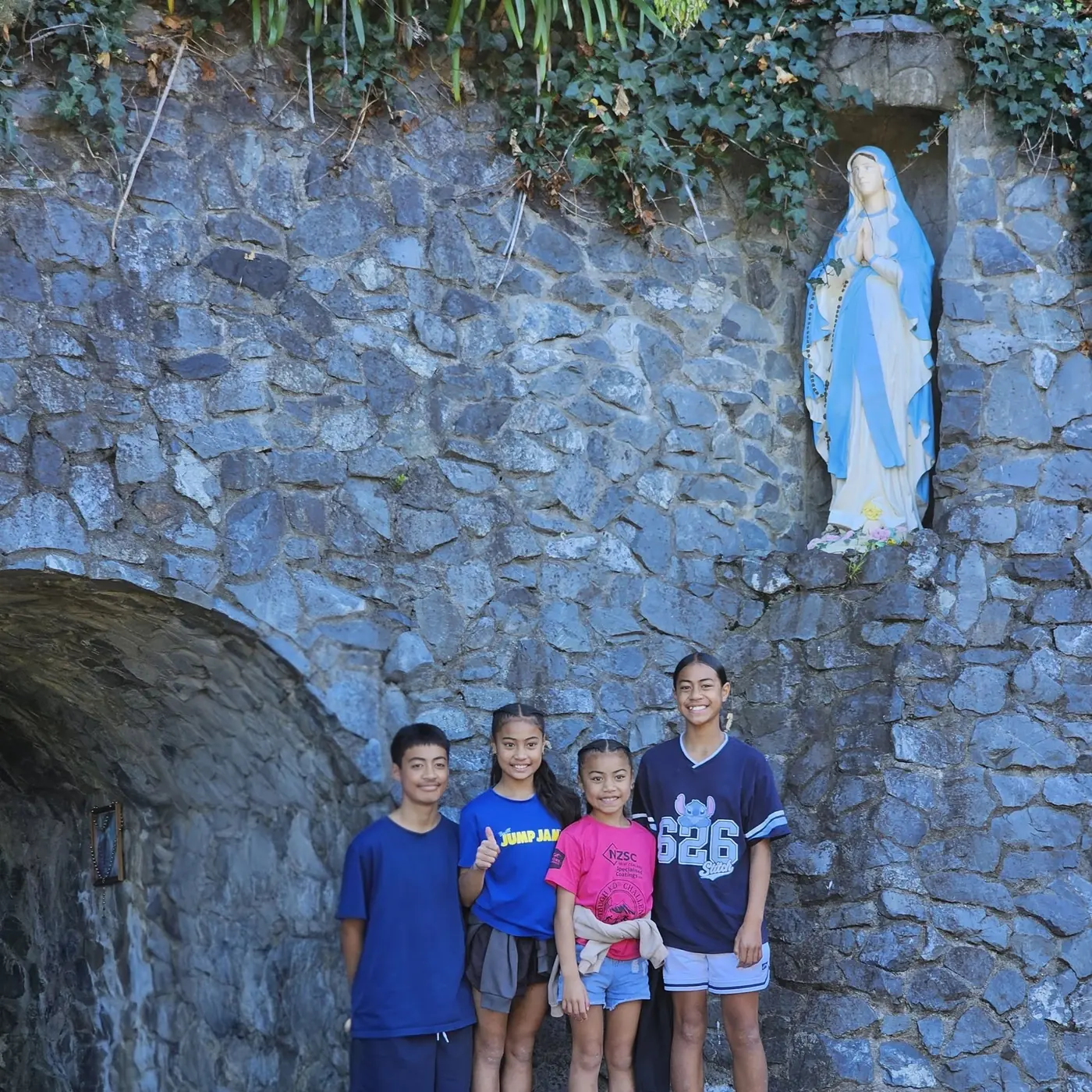
I want my children to understand that everyday life itself can become prayer.
Miguel with his sisters at the grotto where Venerable Suzanne Aubert rests, Aotearoa New Zealand.
That can happen in very small moments: putting a banana skin back into the compost, watering the thirsty peace lily sitting quietly in the corner, thinking about whether something we buy can be recycled or was sustainably sourced. Sometimes I hear my boys asking questions about how something was produced, or whether child labour was involved. I am glad they think that way. I am glad they ask questions and care about justice. As my eldest son put it, caring for creation is simply part of our daily lives, and something we value a lot.
I don’t think my grandparents would have used the words integral ecology. I certainly didn’t grow up hearing them. But when I look back now, I can see what they gave us.
They showed us a way of living in which creation provided for us and we understood that what we received deserved care. We had fruit from the trees, water when it was available, clothes that moved from one person to another, food prepared by hands that had learned from other hands, neighbours who could come and take flowers when it was their turn to decorate the church.
None of that felt like a programme. It was just home.
What carries forward
If there is one thing I hope carries forward, it is that same recognition: everything we are given comes from the Creator, and we have a responsibility to care for it.
What we have can be sufficient for our needs—and more—if we learn to receive it with gratitude, use it responsibly, and pass it on with love.
Vanessa Leota with her brother Michael outside their grandparents’ home in Samoa.
Signature stories · Five years of the Laudato Si’ Action Platform
Keep reading
-
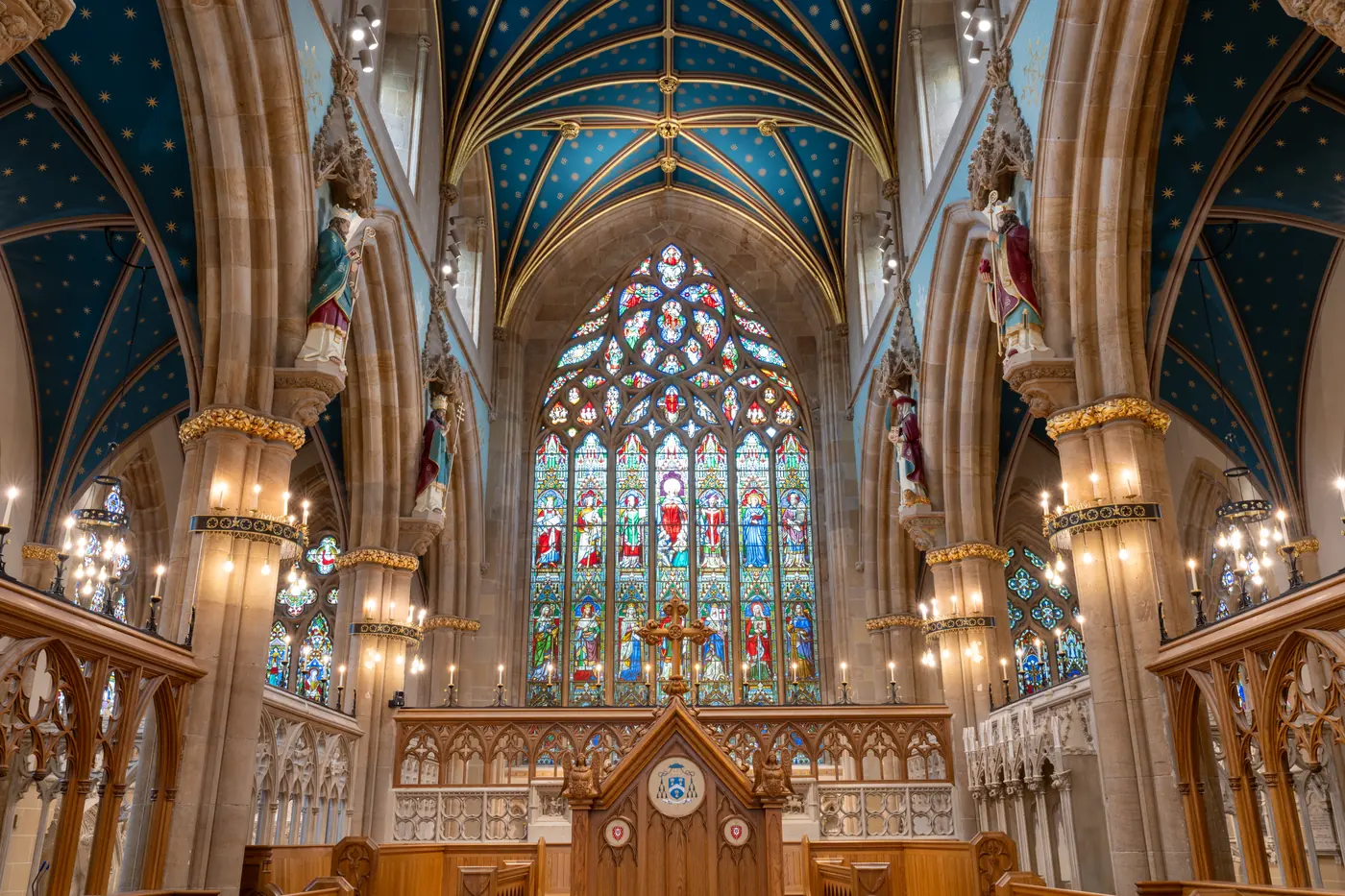 Rebuilding Our Churches
What does it mean to rebuild a church?
-
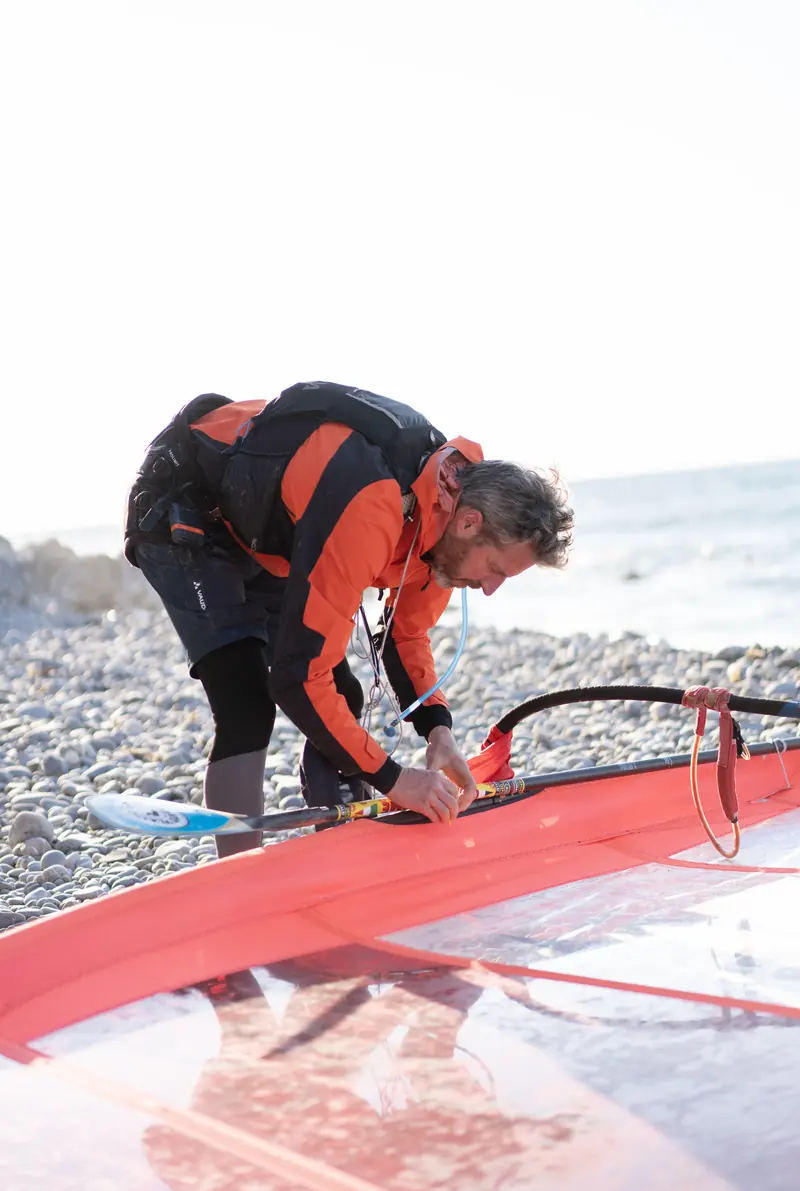 The Same Bottle
What becomes visible when the same ordinary object passes through different hands.
-
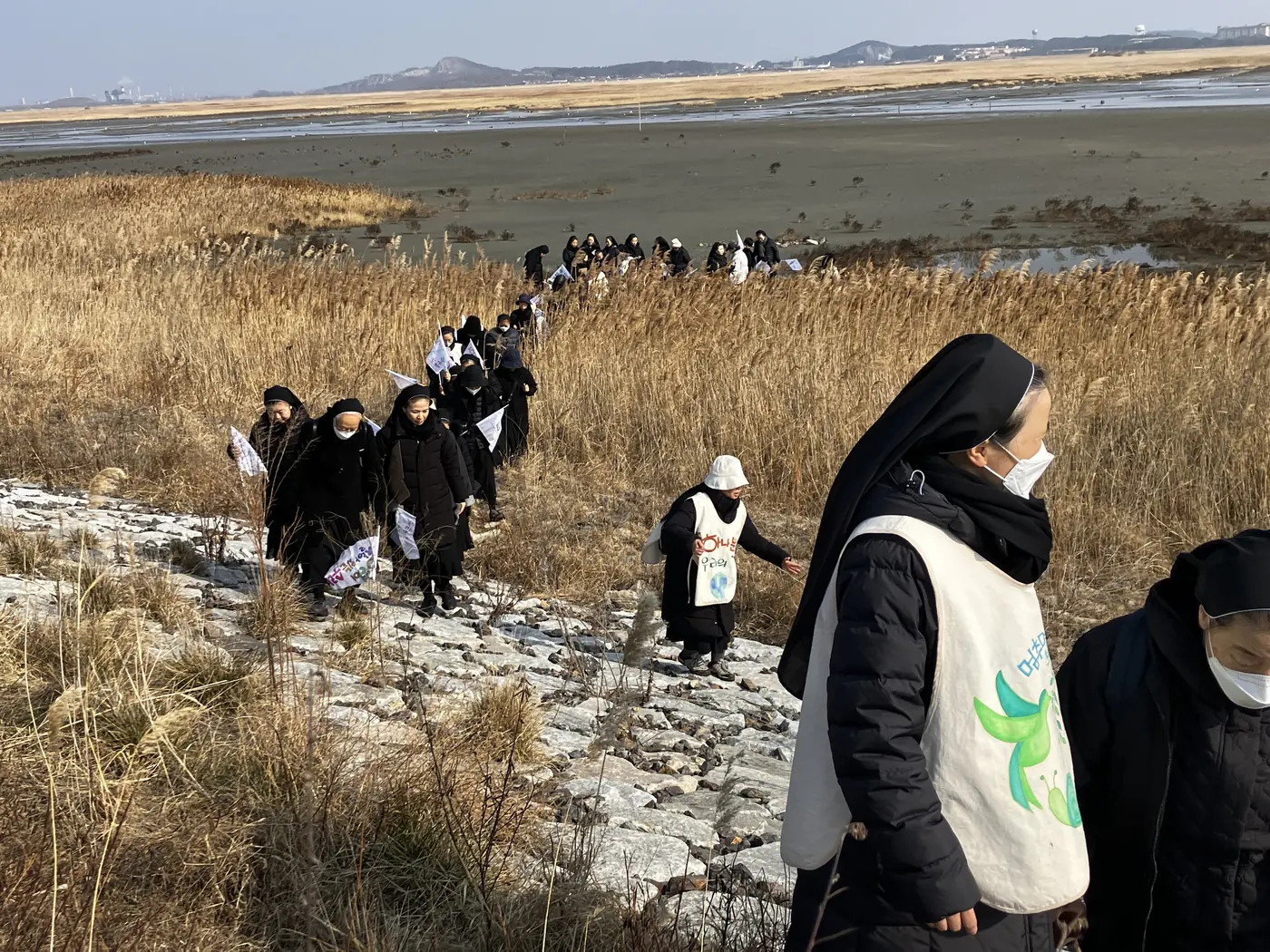 What the Land Asks of Us
River, tidal flat and soil — three places close enough to change the people who stay with them.
-
 After Everyone Goes Home
Planting a tree can take minutes. Growing one asks for water, hands, institutions—and sometimes a horizon longer than a human life.
From the Laudato Si’ Action Platform annual report. Celebrate five years with us →