Ten Key Moments When Pope Leo XIV Reaffirmed the Christian Vocation to Care for Our Common Home
Posted February 26, 2026
From the earliest months of his pontificate , His Holiness Leo XIV has placed the care for creation at the heart of Christian discipleship. Far from treating ecology as a secondary or “thematic” concern, Pope Leo XIV has consistently presented it as a spiritual, moral, and ecclesial vocation, deeply rooted in Scripture, Catholic social teaching, and the lived experience of the poor.
Building in continuity with Laudato Si’, Pope Leo XIV has begun to articulate a clear theological orientation for the Church: lasting peace is inseparable from care for creation, and authentic faith demands an ongoing process of ecological conversion.
Below are ten early moments from the first months of Pope Leo XIV’s pontificate that illuminate the foundations he is laying—signposts of a vision still unfolding, yet already shaping how the Church may discern its path forward.
1. A mission inscribed in creation itself
Celebrating the Mass for the Care of Creation at the Borgo Laudato Si’ in Castel Gandolfo, the Pope reminded the faithful that ecological responsibility is not an optional add-on to Christian life, but flows directly from our identity as creatures:
“Our mission to care for creation, to foster peace and reconciliation, is Jesus’ own mission, the mission that the Lord entrusts to us.”
— Homily for the Care of Creation, 9 July 2025
By framing care for creation as a mision, Pope Leo XIV situates ecology within the language of calling, response, and fidelity, rather than solely activism or environmental management.
2. Creatures among creatures, not masters of all
At the inauguration of the Borgo Laudato Si’, the Pope offered one of his clearest statements on the relationship between humanity and the rest of creation:
“We are creatures among creatures, not creators.”
— Homily, Borgo Laudato Si’, 5 September 2025
This affirmation challenges deeply rooted cultural assumptions of domination and technocratic control. Human dignity, the Pope insists, is not diminished by recognizing limits; rather, it is fulfilled through responsibility and restraint.
3. Peace, justice, and ecology: one single horizon
Addressing the international community during COP30 in Belém, Brazil the Pope drew a direct line between ecological degradation and global instability:
“If you want to cultivate peace, care for creation.”
— Message to COP30, November 2025
In a world marked by armed conflict, forced migration, and resource exploitation, Pope Leo XIV warns that peace efforts detached from ecological responsibility remain fragile and incomplete.
4. The ecological crisis as a moral crisis
During the same message, the Pope explicitly rejected the idea that the ecological crisis can be solved by technical solutions alone:
“The ecological crisis ‘is a moral issue’… [and] reveals the urgent moral need for a new solidarity.”
— Message to COP30, November 2025
Echoing earlier papal teaching, he emphasized that policies, technologies, and financial instruments must be accompanied by conversion of hearts, lifestyles, and institutions.
5. Solidarity written into the soil
For Pope Leo XIV, care for creation is inseparable from care for the poor:
“Care for creation becomes an expression of humanity and solidarity.”
— Message to COP30, November 2025
Environmental destruction, he notes, disproportionately affects those who have contributed least to it. Ecological conversion, therefore, is also an act of justice and fraternity.
6. When Hope becomes conversion
Addressing participants at the Raising Hope Conference marking the tenth anniversary of Laudato Si’, Leo XIV made clear that the Church has entered a new phase in its ecological journey, one that moves decisively beyond reflection toward lived transformation:
“It is now more important than ever to return to the heart… It is only by returning to the heart that a true ecological conversion can take place. We must shift from collecting data to caring.”
— Address at the Raising Hope Conference, Mariapolis Centre (Castel Gandolfo), 1 October 2025
In this light, Raising Hope is not a slogan but a spiritual and ecclesial process. Hope is raised when ecological concern becomes personal and communal, when faith shapes concrete choices, and when care for creation is integrated into lifestyles, institutions, and relationships.
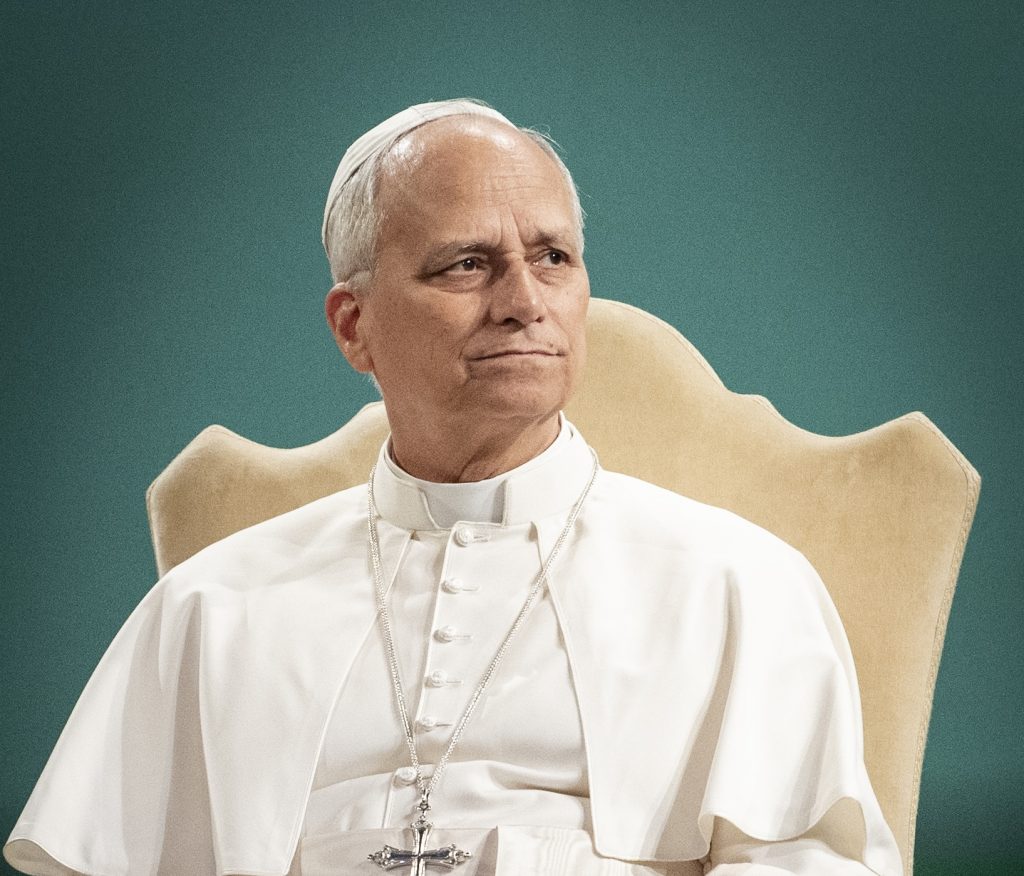
Photograph by Cristian Gennari, Raising Hope Conference
As the Pope affirmed, ecological conversion is inseparable from interior conversion: it transforms how we relate to God, to others, to nature, and to ourselves, anchoring integral ecology in the deepest source of Christian life.
7. A call to ecclesial responsibility
In his message to the bishops of Madagascar, Pope Leo XIV addressed the Church’s leadership directly:
“Care for our home is an integral part of your prophetic mission. Take care of creation, which weeps, and teach your faithful the art of protecting it with justice and peace”
— Message to the Bishops of Madagascar, 16 June 2025
This statement reinforces the idea that dioceses, congregations, and Catholic institutions are not observers of ecological change, but agents of transformation, responsible for aligning governance, investments, and pastoral priorities with integral ecology.
8. Harmony with God and with creation
During the Jubilee meeting with Roma, Sinti, and travelling communities, the Pope framed ecology in explicitly spiritual terms:
“…a more peaceful and just coexistence, in harmony with God, with creation and with others”
— Jubilee Address, Rome, 18 October 2025
Here, ecological conversion is presented as part of the Church’s broader mission of reconciliation—between peoples, cultures, and the whole of creation. Ecological conversion is inseparable from the healing of broken relationships between God, human communities, and the earth itself. To seek peace while ignoring environmental harm, especially where it disproportionately affects marginalized peoples, is presented as a contradiction at the heart of Christian witness.
9. Young people as protagonists of hope
Speaking to the Mediterranean Youth Council, Pope Leo XIV entrusted the ecological future to the next generation:
“You are the ‘now’ of our hope for the future!”
— Address to the Mediterranean Youth Council, 5 September 2025
Rather than portraying youth as victims of ecological collapse, he affirmed their role as builders of new social, political, and ecological imaginaries. Young people are called not only to protest what has been broken, but to imagine and build new ways of living together—socially, politically, and ecologically. In doing so, he positions youth not at the margins of the Church’s ecological mission, but at its center.
10. Loving the poor by protecting the earth
Finally, in his apostolic exhortation Dilexi Te, the Pope offered a synthesis of his social and ecological vision:
“For Christians, the poor are not a sociological category, but the very ‘flesh’ of Christ.”
— Apostolic Exhortation Dilexi Te, 4 October 2025
This line encapsulates a core insight of integral ecology: the cry of the earth and the cry of the poor are one and the same.
Walking this path together
Through these teachings, Pope Leo XIV invites the Church to move beyond abstract concern toward embodied, communal, and measurable ecological conversion. The Laudato Si’ Action Platform exists precisely to support this journey, helping dioceses, institutions, and communities translate vocation into action, spirituality into structures, and hope into concrete commitments.
Because caring for creation is not simply about protecting nature. It is about learning again how to live as God’s people, within God’s world, for the sake of all.