More Than a Post: How Digital Missionaries Are Learning to Tell Stories for Our Common Home
Posted August 13, 2026
What does it mean to be a missionary in a space where people scroll past hundreds of messages every day?
For one week in July, participants from across the world gathered online to explore that question through the first Digital Missionaries: Storytelling for Integral Ecology bootcamp, organized by the Laudato Si’ Action Platform.
The answer they discovered was not simply to post more.
It was to listen more carefully. To know why they are communicating before deciding what to communicate. To tell stories that invite encounter rather than simply compete for attention. And to see digital spaces themselves as places where accompaniment, faith, and care for our common home can take root.
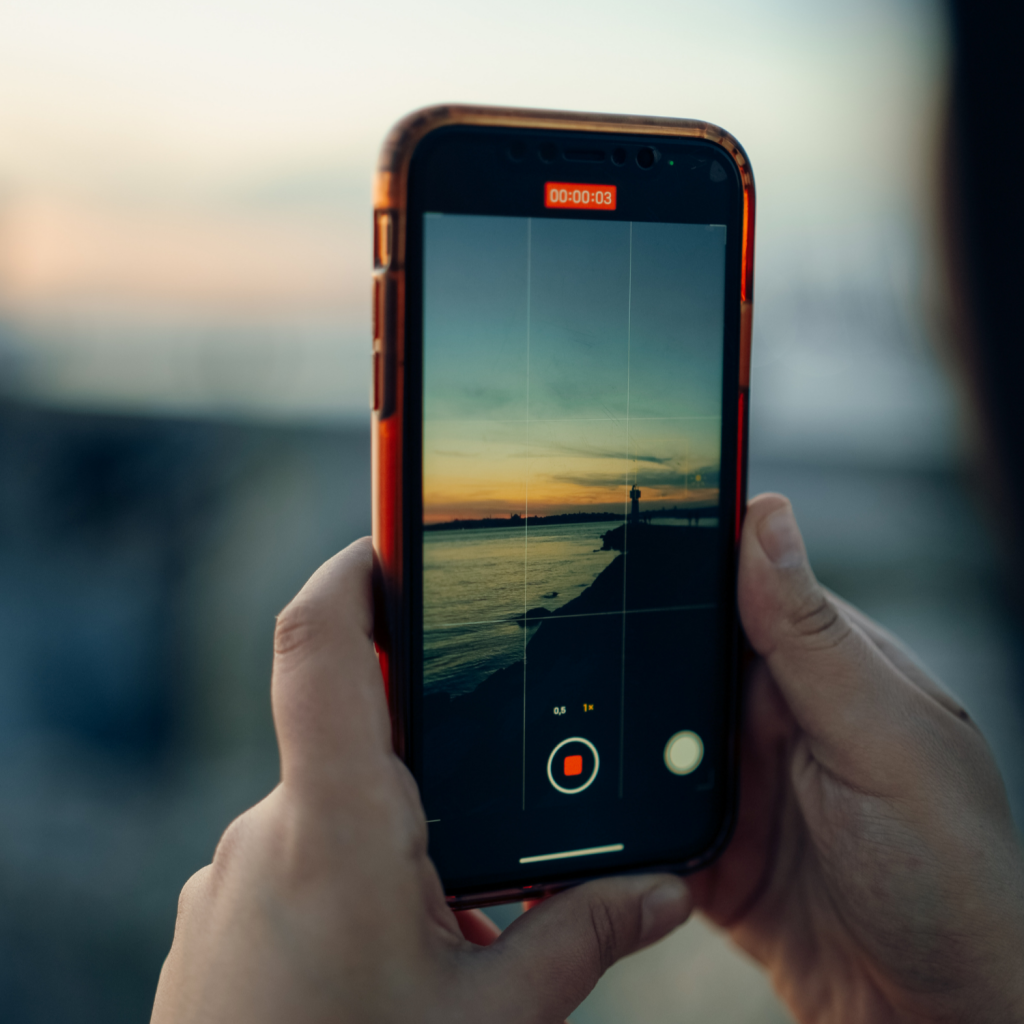
Digital mission is not mastered through six presentations. It develops through the next post that someone dares to publish, the story they learn to tell more clearly, the conversation they choose to enter with care, the person they listen to before responding, and the community they slowly build around a shared purpose.
More than 700 people applied to take part in the first Digital Missionaries bootcamp. From that pool, more than 50 participants from 25 countries joined the six-module experience, representing parishes, dioceses, religious communities, schools, Catholic movements, nonprofit organizations, and independent ministries. Some already managed social media professionally; others arrived with little experience creating digital content at all.
That difference became part of the experiment.
From followers to relationships
The bootcamp began by asking participants to reconsider what “influence” means.
Rather than treating followers, likes, or visibility as the goal, participants were invited to see themselves as missionaries in the “digital continent”—using communication not simply to build audiences, but to share the Gospel, accompany others, and help create spaces of genuine encounter. As guest speaker and Hallow CFO Erich Kerekes put it during the week, the call is ultimately about “sanctifying the digital space.” That means listening before speaking, understanding the people we hope to reach, and creating content that serves relationship, faith, and action.
Over the course of the week, the cohort worked through questions of purpose-driven storytelling, identity and vocation, personal branding for mission, creating content that connects, growing community online, and developing a realistic personal digital influence plan.
Practical assignments pushed those ideas beyond theory. Participants reflected on their identity and vocation as communicators, developed and published content, considered the people and communities they hoped to reach, and began planning what consistent digital mission could look like within the realities of their own lives.
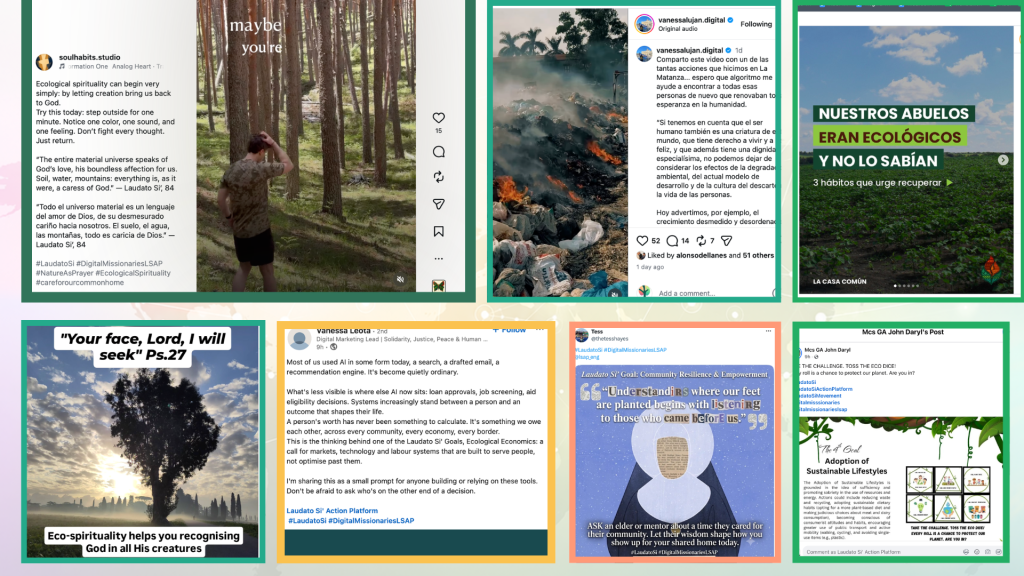
Bootcamp participants designed and created various social media posts across different channels as a part of their active learning.
For some, that meant learning new tools. For others, it meant something more basic—and perhaps more difficult: finding the confidence to speak.
That transformation appeared repeatedly in the post-program evaluation. Among the 27 participants who completed the anonymous survey, 81% rated the ideas and tools as highly applicable to their local or institutional context, while 78% gave the practical assignments a rating of four or five out of five.
The exercise participants most frequently identified as helpful was not technical at all: reflecting on their identity and vocation as a communicator.
A classroom spanning time zones
The community that formed around the sessions became nearly as important as the curriculum itself.
Survey responses came from Africa, Asia, Europe, Latin America and the Caribbean, the Middle East and North Africa, North America, and Oceania. For some, participation meant joining after a full workday. One participant attended sessions scheduled from 10 p.m. until midnight locally. Another logged on between 2 a.m. and 4 a.m.
Yet participants repeatedly described meeting other people committed to ecological and spiritual transformation as one of the most meaningful parts of the week.
For Helena Choo of Singapore, Founder & Ambassador-in-Christ of Graces In Life, that global exchange expanded her understanding of what digital mission can make possible.
“Participating in the bootcamp shifted how I see my role as a digital missionary. Beyond content creation, I steward questions that connect AI, policy, and power across continents. Learning alongside people from different countries and ministries has allowed me to expand synodal rooms into digital spaces, where we collectively listen, reflect, and respond responsibly together as God’s children.”
Helena plans to bring questions emerging from global forums into her YouTube Shorts, @CrossLoving, inviting a wider audience into reflection on care, power, and the way societies measure what matters.
Learning from people already living the mission
The bootcamp brought participants into conversation with practitioners who are already navigating digital mission in very different contexts. Verônica Brunkow reflected on the possibilities of digital influence for mission; Muriel Fleury explored purpose-driven storytelling rooted in faith; Fr. José Juan Montalvo (Padre Borre) spoke about authenticity, identity, and ministry online; José Manuel De Urquidi shared practical insights on creating content that connects; and Erich Kerekes, co-founder of Hallow, offered lessons from building and growing a large Catholic digital community.
Their testimonies complemented the work of facilitators José Antonio Hernández Griego, Diana María Lozano, Ana Gabriela Barrera, and Jorge Cortés Durán, who helped participants translate these examples into their own communication practice. Together, they reinforced a central idea of the week: digital mission is not simply about producing more content, but about communicating with purpose, building trust, and creating spaces where people can encounter one another and act together.
What comes after the bootcamp?
When participants were asked where they found themselves at the end of the program, the most common answer was telling: “I have new ideas, but I need more practice putting them into action.”
That may be exactly where a formation program like this should end.
Digital mission is not mastered through six presentations. It develops through the next post that someone dares to publish, the story they learn to tell more clearly, the conversation they choose to enter with care, the person they listen to before responding, and the community they slowly build around a shared purpose.
For the Laudato Si’ Action Platform, that points toward something larger than a successful training.
The Church already has people with stories worth telling: communities restoring ecosystems, religious congregations changing how they use resources, young people mobilizing around climate justice, parishes learning to live Laudato Si’, and families discovering new ways to care for creation.
The challenge is helping more of them tell those stories with clarity, humanity, and hope—and helping them find one another.
The first Digital Missionaries cohort was one small step toward doing exactly that. But the community formed during the week is already continuing beyond the bootcamp: participants are sharing work, exchanging feedback, finding collaborators, and accompanying one another as they put their plans into practice. As the Church looks toward World Youth Day 2027, the hope is that these relationships will continue to grow—online and, for some, eventually in person—as a global network of digital missionaries serving our common home.
Digital Missionaries 2026: Early Results
- Six modules combining faith, storytelling, digital strategy, and integral ecology
- Participants joining from across the world and a wide range of Catholic ministries and institutions
- 81% of survey respondents rated the learning highly applicable to their context
- 78% rated the assignments highly useful for applying what they learned
- 89% are interested in remaining connected through the Digital Missionaries community
- 85% would be highly likely to recommend a future cohort
- Reflection on identity and vocation as a communicator was the most frequently selected helpful assignment