It Started with One Plastic Bottle: How One Surfer’s Journey Reached Pope Leo XIV
Posted July 16, 2026
“You don’t have to solve the whole problem yourself. But you can start something that others want to join.”
When Merijn Tinga completed the final stage of his windsurfing expedition from Nice to Rome, he wasn’t chasing another record or finishing an athletic challenge. He had come to deliver a message.
His proposal to Pope Leo XIV was surprisingly simple: encourage the use of deposit return systems—programs that give bottles and cans a monetary value so they are returned rather than discarded. They already exist in many countries and have proven remarkably effective at reducing litter. What they need, he believes, is wider adoption and courageous leadership.
One bottle became one question
Yet the story that eventually brought him to the Vatican didn’t begin on the Mediterranean. It began nearly a decade earlier with a single plastic bottle lying on a remote island.
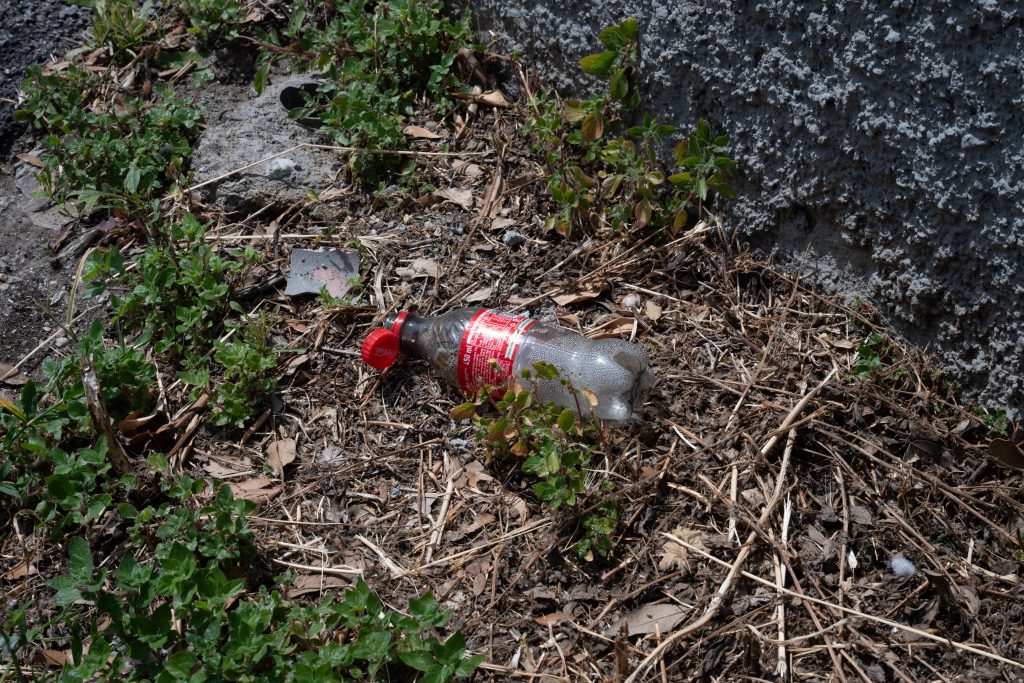
“During a holiday in Sweden,” Tinga recalls, “I found Dutch and English plastic bottles washed up on a remote uninhabited island. What struck me was that all the Scandinavian countries already had deposit return systems, and as a result far fewer bottles ended up as litter.”
Standing on that shoreline, he realized something that would shape the next ten years of his life.
“We had a simple solution available—but we were not using it.”
That realization transformed his relationship with the problem. Plastic pollution was no longer simply an environmental tragedy. It became a question of responsibility and systems. Instead of asking why there was so much litter, he began asking why proven solutions were not being adopted.
Back in the Netherlands, he launched a petition calling for a deposit return system for plastic bottles. To draw attention to the campaign, he built a windsurf board made from plastic collected on local beaches and attempted to break a world record.
From local action to national change
The record never came.
The campaign did.
More than 60,000 people signed the petition, helping build the political momentum that led to the introduction of deposit returns on plastic bottles in the Netherlands in 2021. Since then, littered plastic bottles have reportedly declined by around 80 percent.
Rather than seeing that victory as the end of the story, Tinga began wondering how the same idea could travel beyond his own country.
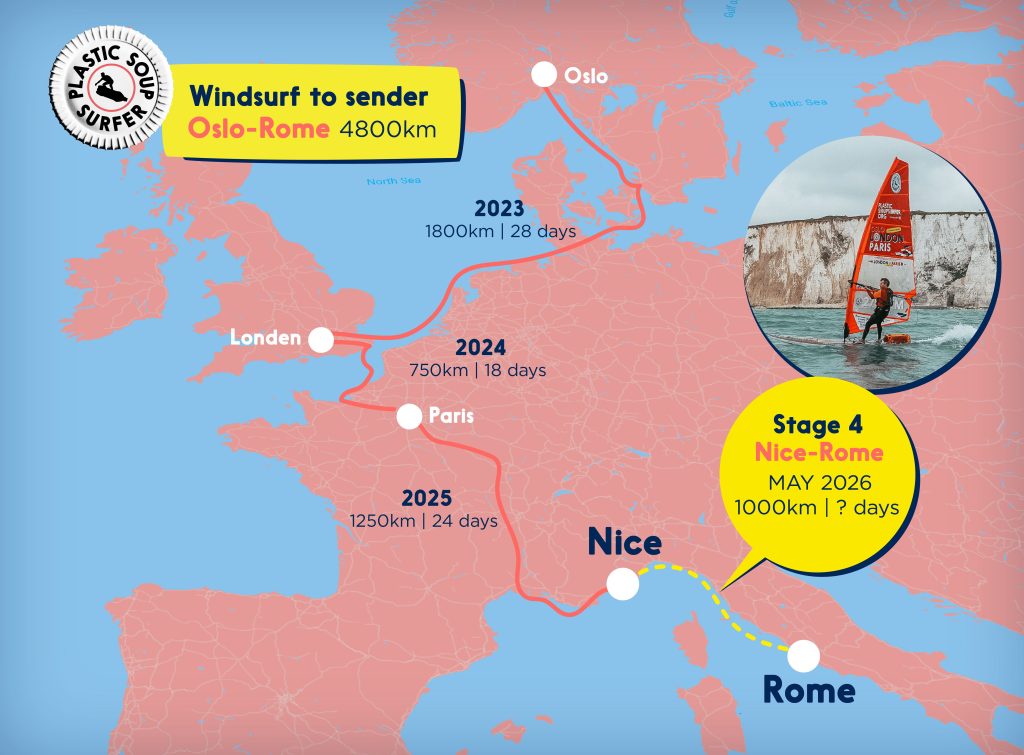
“In 2023 I windsurfed from Oslo to the UK Parliament in Westminster, carrying the English bottle I had found in Sweden back to where it came from.”
The journey continued.
London to Paris.
Paris to Nice.
Finally, Nice to Rome.
Why the Vatican?
Each expedition carried the same symbolic message: pollution does not respect borders, and responsibility shouldn’t either.
“My message and goal was to tell Italy and Pope Leo: there is already a proven solution to protect our common home. Deposit return systems are not a new invention. They are a practical—even old-fashioned—idea based on responsibility. What is needed is the courage and leadership to implement them.”
For readers unfamiliar with the concept, the system itself is almost deceptively simple.
“When you buy a bottle or can, you pay a small extra amount,” he explains. “When you return the empty container, you get that money back. Suddenly, that bottle is no longer worthless waste—it has value.”
That shift in perspective changes behavior.
Instead of ending up in rivers, streets, or eventually the ocean, bottles are collected and returned into a circular system where they can be reused or recycled. Communities often organize bottle collections to raise money for charitable causes, allowing a simple daily habit to become an act of solidarity.
“It is one of those rare solutions where everyone benefits,” Tinga says. “Citizens, companies and the environment.”
For Tinga, bringing this message to the Vatican was never simply about influencing one institution. He believes plastic pollution is ultimately a moral issue.
“I saw the Vatican as an important place to bring this message because the issue of plastic pollution is ultimately not only a technical or political challenge—it is a question of responsibility, values, and our relationship with the world around us.”
Reading Laudato Si’ helped him recognize that the different parts of his own life had been pointing toward the same vision all along.
“Before reading it, I already understood many of its principles from different perspectives,” he says. “As a biologist, I had learned that all living systems are interconnected. As an anti-plastic campaigner, I had experienced the consequences of a technocratic mindset in which materials are treated as disposable. And as a surfer, I feel a profound connection with nature and the feeling of being part of something much larger than ourselves.”
“Reading Laudato Si’ brought these different perspectives together in a powerful and inspiring way.”
That insight also shaped the way he sees the role of faith communities.
“They can help transform the way we think about waste—not as something that simply disappears after we throw it away, but as a reflection of our relationship with creation and our responsibility toward future generations.”
His audience with Pope Leo XIV became one of the most memorable moments of that journey.
“I was granted a private audience of around fifteen minutes,” he says. “Of course, never in my life had I dreamt that I would really get to meet His Holiness.”
“What stood out most was the time he took to genuinely listen. It was not just a formal presentation; there was a real exchange.”
During the conversation, Pope Leo surprised him by sharing a childhood memory.
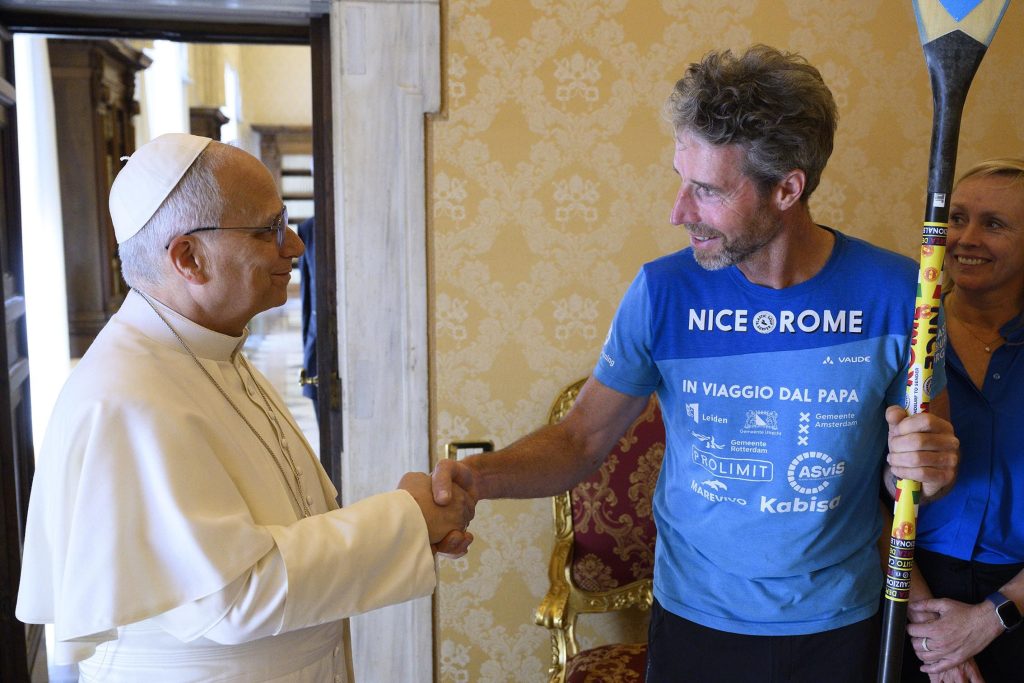
“He responded by telling me how, as a child, he had collected bottles in order to return them and receive the deposit.”
Encouraged by the exchange, Tinga proposed installing a deposit return machine in the Vatican store as a concrete expression of care for creation. Pope Leo explained that he did not directly oversee the shop but said he would present the idea to those responsible.
“What impressed me was the immediate follow-up,” Tinga says. “Only two working days later, we received a response from the Vatican inviting us to discuss the proposal further.”
Those conversations continue today.
Hope begins with small actions
What gives him hope, however, is larger than any single proposal.
“The fact that a simple proposal can open doors for dialogue shows the power of combining a practical solution with a larger vision of responsibility and care for creation.”
He points out that conversations have continued not only in the Vatican but also in Monaco and elsewhere, where leaders are exploring how practical environmental policies can inspire broader change.
Still, after thousands of kilometers, countless conversations, and even a meeting with the Holy Father, Tinga says the greatest lesson remains remarkably ordinary.
“It all started with one everyday action: picking up a littered plastic bottle.”
“I did not have a complete plan or know where it would lead.”
His advice for anyone hoping to care for our common home reflects that same simplicity.
“Don’t wait until your plan is perfect.”
“When I started my first plastic campaign, I had no idea it would lead to the Dutch Parliament, the European Commission or the Vatican. I just picked up a bottle and started asking questions.” Then he pauses before offering the thought that perhaps best captures the spirit of his entire journey.
“You don’t have to solve the whole problem yourself. But you can start something that others want to join.”