From Storybook to Solution: How Students Are Learning to Care for Our Common Home
Posted September 3, 2026
A children’s story can explain an environmental problem. A well-designed learning experience can help children imagine what they might do about it.
That movement—from awareness to participation—is at the heart of Jack the Super Prawn, an Australian environmental education initiative created by author and Laudato Si’ Action Platform participant Antoine Jaja.
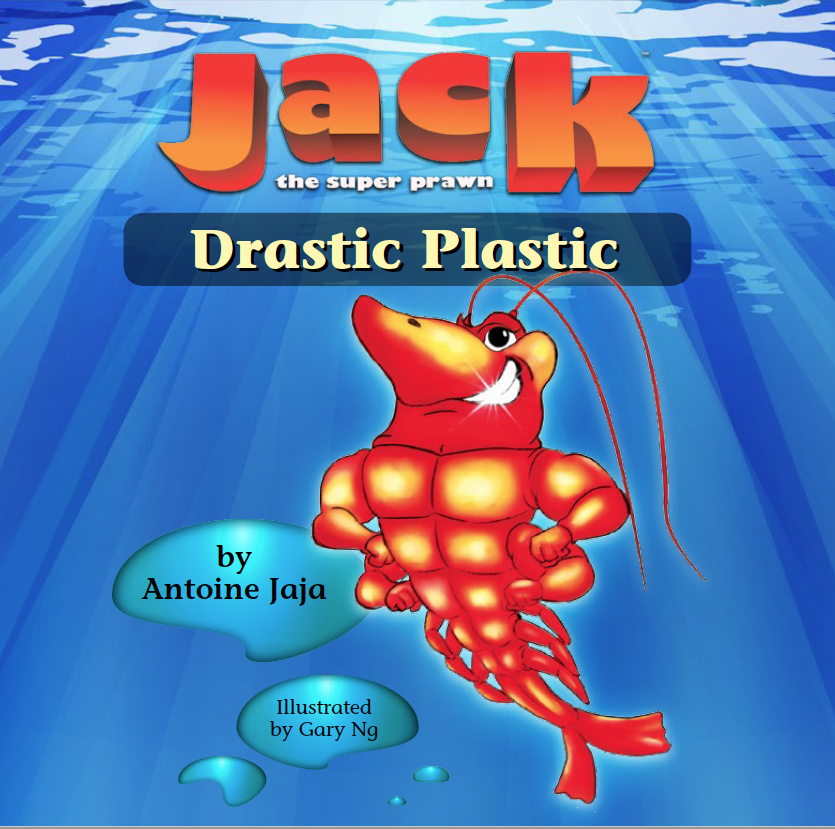
Jack the Super Prawn begins with a charismatic hero: a prawn who carries young readers into adventures shaped by pollution and its effects on the natural world. The illustrated adventure stories introduce young readers to pollution and its effects on oceans, wildlife, and communities.
For Catholic educator Anthony Matthews, their strength lies in their ability to begin where children already are. “Jack the Super Prawn meets students where they are,” Matthews wrote, “helping them live a more sustainable life through the power of story.”
He chose the books for his students because they do more than present environmental information. In his view, they respond to “the cry of the earth” by encouraging ecological education, community participation, and care for our common home.
But the story does not end when the book is closed.
Moving beyond the page
Since 2024, the initiative’s annual Pollution Solution Students Conference Day has brought primary students together with teachers, scientists, environmental professionals, engineers, and community leaders.
According to the organizers, approximately 240 students participated in each of the 2024 and 2025 events, with additional schools joining online in 2025.
At a Stage 3 Immersion Day held at St John XXIII Catholic College in Stanhope Gardens, students worked alongside scientists from the Australian Nuclear Science and Technology Organisation, representatives of the New South Wales Environmental Protection Authority, university academics, educators, and engineers.
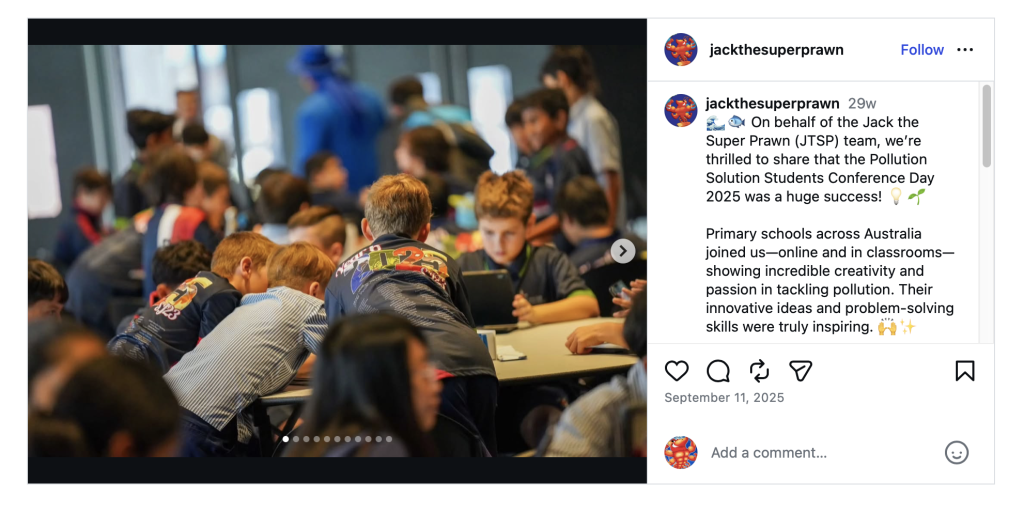
Primary students gather for the 2025 Pollution Solution Students Conference Day
They were not brought together simply to listen to presentations.
Using design thinking, the students identified pollution problems, exchanged ideas, developed possible responses, and created environmental awareness campaigns. They were encouraged, as Matthews described it, to “see, think, and act.”
Student reflections gathered afterward described the experience as “fun” and “interactive.” They emphasized how meaningful it was to collaborate, share ideas, and develop solutions in an environment where “everyone contributed.”
The students were treated not only as learners, but as participants.
For Antoine, that participation is central to the initiative. Jaja reflects: “What if students were not viewed solely as future leaders, but also as contributors today?”
Experts who make room for student voices
Antoine describes the conferences as a way of moving beyond teaching children about environmental problems and toward creating space for their ideas to be heard.
“What if environmental education could evolve beyond teaching young people about environmental problems,” he wrote, “and instead create a pathway through which their ideas are genuinely heard, documented, and shared?”
Tony Coghlan, Director of the De Mazenod Family Education Network, has participated in the conference over several years. He values the specialists who challenge and guide the students, but he believes the most important voices in the room belong to the children themselves.
“The most inspirational people at the conferences are the young people,” he wrote, “who have come up with ideas and collaborated to take positive action to reduce waste.”
That distinction matters. Children are invited to investigate, question, propose, and create. Their ideas may not immediately become public programs or government policies. That is not the measure of their value. The educational achievement lies in helping students recognize that environmental decisions are made through participation. And that their observations, creativity, and experience belong within that conversation.
Antoine expresses that hope directly in the message he wants young participants to receive:
“Your ideas matter.
Your voice matters.
Your contribution matters.”
Turning big concerns into concrete actions
Pollution can feel too large for a child—or an adult—to confront. The conference makes the subject more manageable by connecting global challenges with decisions inside schools and communities.
Students from Mazenod College and other De Mazenod Family schools, for example, have linked their conference participation with an annual five-week Sustainability Drive. Their work includes:
- reducing waste and energy consumption;
- building ecological awareness;
- considering responsible corporate action; and
- identifying “My Actions” and “Our Actions” within their schools.
Coghlan has also introduced students to waste audits. They learn that responsible waste management involves more than choosing the correct bin. A school must understand what it purchases, what it discards, how waste is collected, and what happens after it leaves the campus. As Coghlan put it, “Planning, communication and strategy are critical.”
This systems-based approach helps students see that ecological responsibility is both personal and communal. Individual habits matter, but so do institutional processes, relationships with service providers, and the decisions made by a whole school community.
The phrase “My Actions / Our Actions” gives students a simple way to hold these dimensions together. It asks what each person can do while also asking what becomes possible when a community acts collectively.
What other educators can learn
The Jack the Super Prawn experience offers several lessons that schools and educators can adapt without reproducing the entire conference model.
1. Begin with a story, not only a problem
Statistics can communicate the scale of pollution, but stories help children enter the issue emotionally and imaginatively.
A character, journey, or conflict can make an environmental challenge understandable without diminishing its seriousness. As Matthews observed, literature can meet students where they are and open the door to deeper learning.
2. Give students a real question
Students become more invested when an activity does not have one predetermined correct response.
Rather than asking them to repeat a list of sustainable behaviors, educators can present a problem from the school or local community and invite students to investigate it. Waste, water use, energy consumption, food systems, and biodiversity can all become starting points.
The goal is not simply to produce an attractive poster. It is to help students observe carefully, weigh possibilities, and explain why their proposed action might help.
3. Create space for student voice
Student participation should not be added at the end of a project as a presentation or celebration. It can shape the learning process from the beginning.
Students can help select the issue, investigate its causes, interview community members, design responses, and evaluate what worked. As Coghlan emphasized, one of the central objectives is simply “to provide Student Voice.”
4. Make hope something students practice
Young people already encounter alarming messages about climate change, pollution, and environmental loss. Education should not hide those realities, but neither should it leave students feeling helpless.
Hope grows when students experience themselves working with others, contributing ideas, and completing an action whose results they can see.
Coghlan describes the model through three words: “Learn, Share, Inspire.” Its purpose is not to promise that every problem can be solved easily. It is to show that collaboration can produce meaningful action—and that no one has to care for creation alone.
Stewardship with heads, hearts, and hands
For Catholic schools, this educational process can also become an experience of faith formation.
Students learn that creation is not simply a collection of resources to manage. It is a gift. The students may begin by following the adventures of a fictional prawn. Along the way, they discover that the next chapter—the response to the environmental challenges before them—also belongs to them.