
Five years of the Laudato Si’ Action Platform: A renewed call for ecological conversion
Posted November 4, 2026
At the Vatican, Church leaders reflected on five years of ecological action and introduced new tools to help communities turn their commitments into lasting change.
Five years after the launch of the Laudato Si’ Action Platform, Church leaders gathered at the Holy See Press Office to reflect on what has been achieved, what remains unfinished, and how the Church can deepen its response to the ecological crisis.
The press conference, organized by the Dicastery for Promoting Integral Human Development, marked an important moment in the Platform’s journey. Since its launch in 2021, more than 13,000 participants, including over 6,200 institutions, have joined a shared effort to bring Pope Francis’ encyclical Laudato si’ into everyday practice.
Yet the central message of the gathering extended beyond participation figures. The next chapter of the Platform must be measured by the changes taking root in the lives, decisions, and relationships of Catholic communities around the world.
An anniversary and an examination of conscience
Sr. Alessandra Smerilli, F.M.A., Prefect of the Dicastery for Promoting Integral Human Development, placed the anniversary within the wider journey of ecological conversion initiated by Pope Francis.
Reflecting on the tenth anniversary of Laudato si’, celebrated in 2025, she recalled that the encyclical was never intended merely to be read or quoted. It is an invitation to heal our relationships with God, with one another, and with the earth.
Drawing on the Gospel image of the seed that grows in the soil, Sr. Smerilli reflected on what happens when an encyclical begins to take root—in prayer, education, the care of the land, and the decisions of Church institutions.
She also emphasized that care for creation belongs to the heart of Christian life, rather than being a separate or optional concern.
“If someone were to enter our parishes, schools, families, or religious communities, what would show them that care for creation has become part of the way we live our mission?”
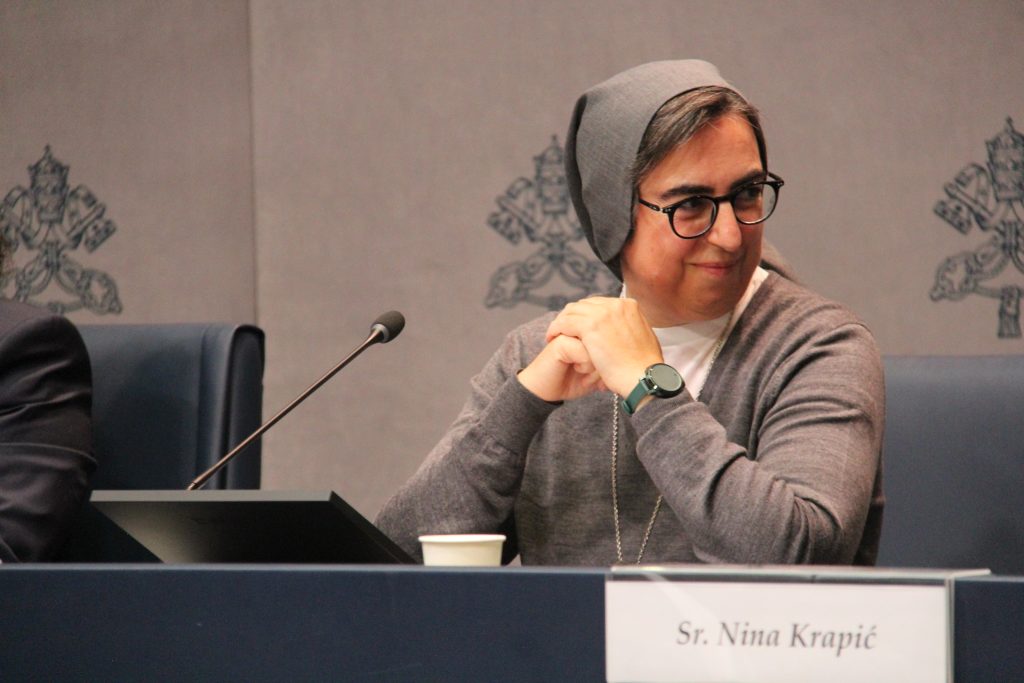
Sr. Alessandra Smerilli, F.M.A., Prefect of the Dicastery for Promoting Integral Human Development, placed the anniversary within the wider journey of ecological conversion initiated by Pope Francis.
Across the world, communities are offering different answers to that question: through school gardens, tree planting in the Democratic Republic of the Congo, renewable energy initiatives in the Philippines, and university networks integrating ecological responsibility into education.
But Sr. Smerilli also called for a deeper assessment of the Church’s progress.
“An anniversary is also a time for an examination of conscience,” she said.
She acknowledged that communities do not begin their ecological journeys with equal resources or opportunities. Some have established networks, technical expertise, and financial support, while others possess the same commitment but face far greater obstacles.
An invitation extended to the whole Church, she argued, brings with it a responsibility to make participation genuinely possible for everyone.
Above all, she urged institutions to look beyond the visibility of their commitments toward the changes those commitments produce.
“The truest measure of our journey is whether the Encyclical is changing the way our institutions make decisions and renew themselves.”
Her remarks also connected care for creation with care for human dignity, recalling Pope Leo XIV’s teaching on the protection of the human person in the age of artificial intelligence.
For Sr. Smerilli, the future of the Platform lies increasingly in what communities can offer one another: sharing knowledge, experience, and practical support across borders and Church sectors.
“Today, we are asking a new question: What can the journey of one community make possible for another?”
Introducing the Atlas of Laudato Si’
Building on that vision, Alonso de Llanes, Director of the Laudato Si’ Action Platform, presented the next stage of the Platform’s development, including a new Atlas of Laudato Si’ connecting Catholic ecological action with geographical and environmental information.
A video preview introduced the Atlas, illustrating how participating institutions can be situated within the environmental realities of the places they serve.
Developed in collaboration with geographer and cartographer Molly Burhans, the Atlas brings together geospatial expertise and the experience of communities participating in the Laudato Si’ Action Platform. It allows users to explore participating institutions by country and diocese, access publicly shared plans and reflections where consent has been given, and examine environmental information relevant to local decision-making.
The aim is to help Catholic communities better understand their circumstances, discover the experiences of others, and identify opportunities for collaboration.
As de Llanes explained, the first five years have also revealed an important distinction between recording commitments and understanding their impact.
“An enrollment is a beginning, not an achievement. A plan is a commitment, not yet a result.”
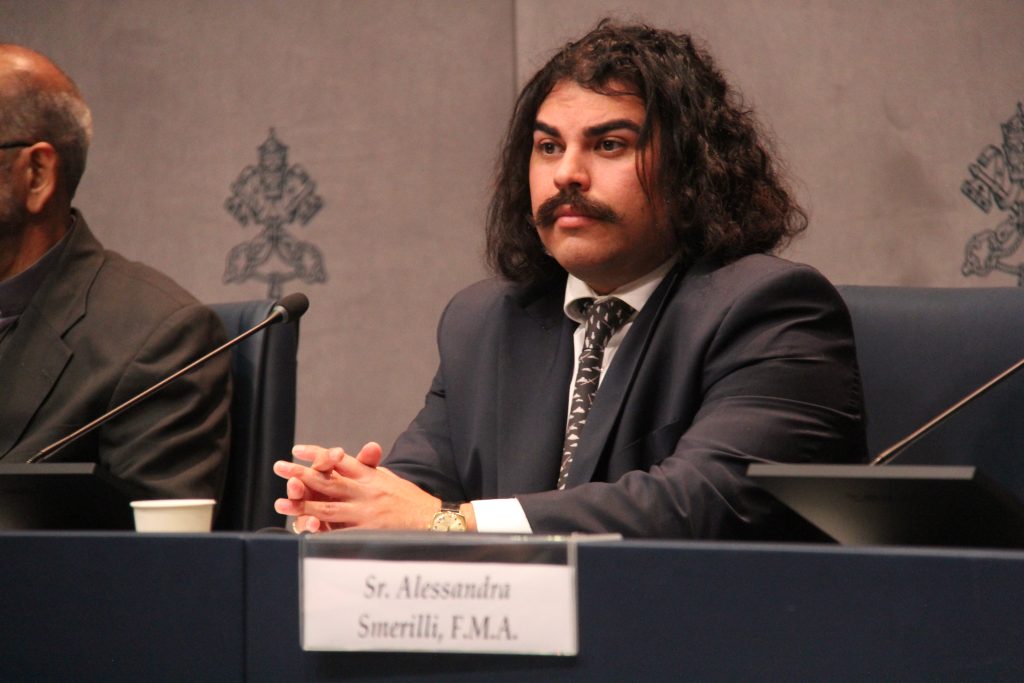
Alonso de Llanes, Director of the Laudato Si’ Action Platform, presented the next stage of the Platform’s development.
He illustrated this with an example from Nigeria, where one diocese insisted on establishing a credible plan to water and care for trees before proceeding with a planting initiative.
The Platform’s future priorities respond to lessons such as these. Alongside the Atlas of Laudato Si’, they include new offline planning resources for communities with limited internet access, a Learning Hub for sharing practical experience, exploration of artificial intelligence and improved approaches to evaluating impact, and an expanded network of Digital Missionaries.
Together, these initiatives seek to make the Platform more accessible, useful, and responsive to the communities it serves.
Ecological conversion in the life of the Church
Other speakers reflected on how ecological conversion is already changing the life and mission of Catholic institutions.
Bishop Allwyn D’Silva of India drew on his experience in the Archdiocese of Bombay, where environmental responsibility has increasingly become part of parish and diocesan life.
“Care for creation is part of our pastoral responsibility,” he affirmed, describing initiatives ranging from a Lenten “carbon fast” to rainwater harvesting, solar energy, and biodiversity protection.
But he also acknowledged the challenge of sustaining these efforts as leadership and circumstances change.
“Parish priests change. Volunteers move on. New responsibilities arise.”
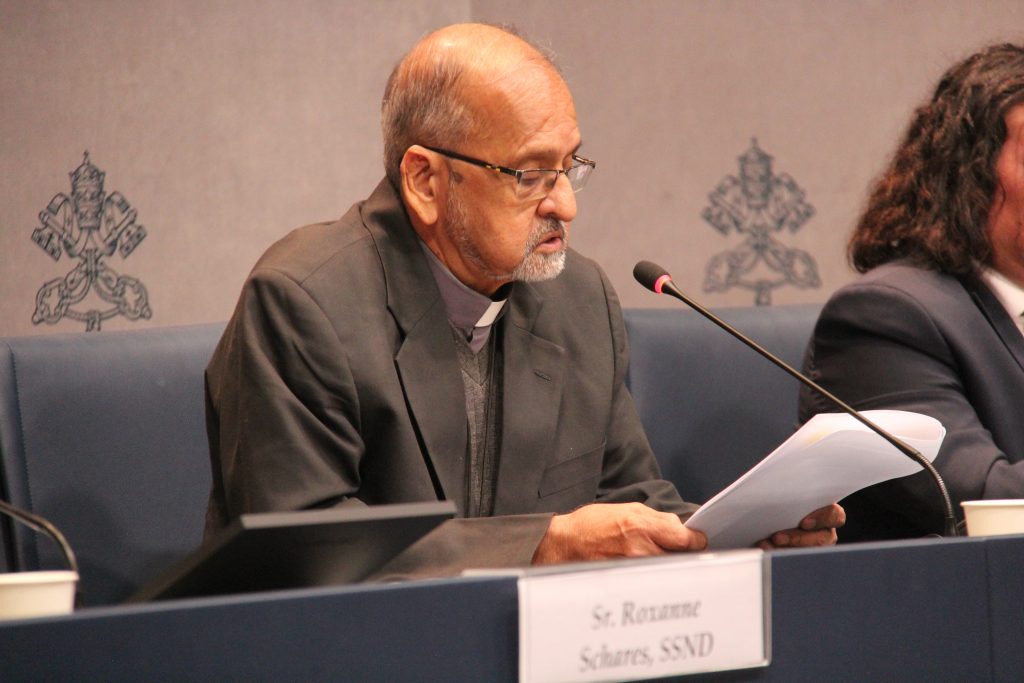
Bishop Allwyn D’Silva of India drew on his experience in the Archdiocese of Bombay, where environmental responsibility has increasingly become part of parish and diocesan life.
For Bishop D’Silva, this is where the Laudato Si’ Action Platform can make an important contribution: helping communities turn individual enthusiasm into lasting pastoral commitments. He encouraged fellow bishops to integrate care for creation into diocesan planning and to create opportunities for parishes to learn from one another.
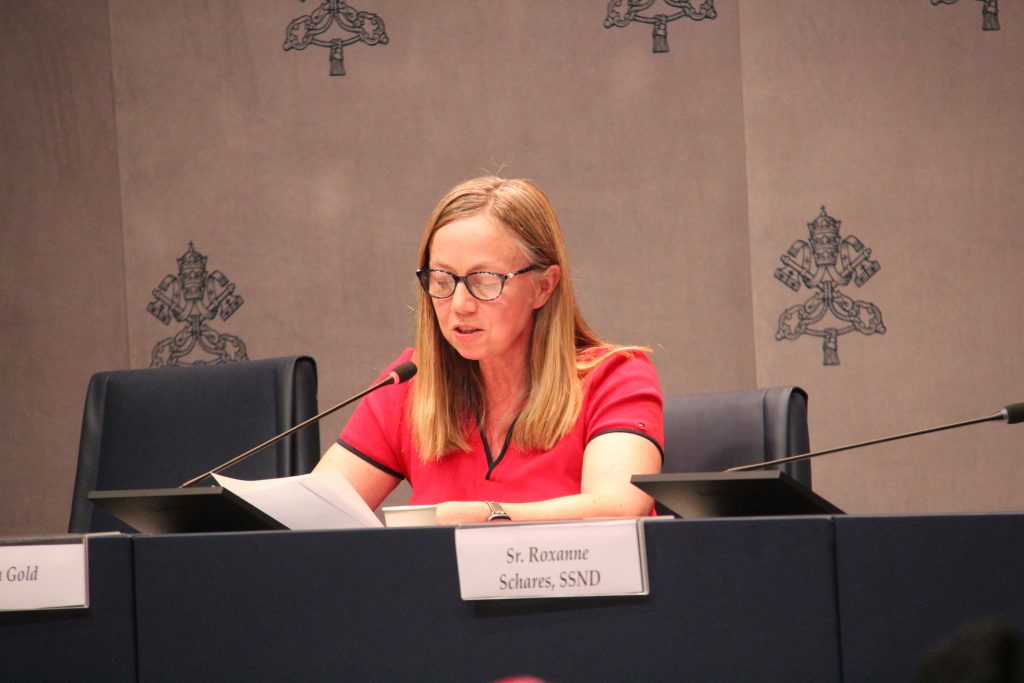
Sr. Roxanne Schares, SSND, Executive Secretary of the International Union of Superiors General (UISG), emphasized how religious congregations are translating ecological conversion into accompaniment, solidarity, and practical action.
In South Korea, Sisters of Notre Dame stood alongside communities working to protect threatened tidal wetlands. What began with presence and prayer developed into education, solidarity, and public witness.
In South Sudan, sisters helped local farmers recover agricultural skills disrupted by decades of conflict and displacement. That initial effort has since expanded into a sustainable agriculture project supporting food security, nutrition, and livelihoods.
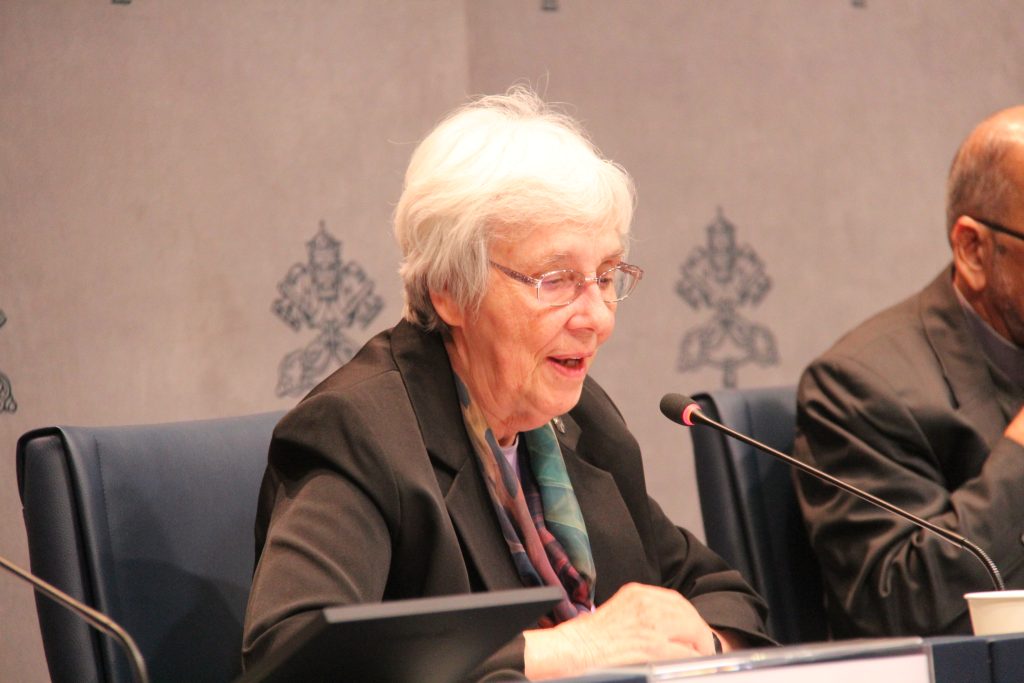
Sr. Roxanne Schares, SSND, Executive Secretary of the International Union of Superiors General (UISG), emphasized how religious congregations are translating ecological conversion into accompaniment, solidarity, and practical action.
Drawing on the experience of the UISG’s global network of nearly 600,000 sisters from approximately 1,900 congregations, Sr. Roxanne highlighted the contribution of religious communities serving people at the margins. She described the Platform as offering a common framework for reflection, discernment, action, and collaboration, helping congregations deepen their commitment to ecological conversion.
The urgency of the next five years
Dr. Lorna Gold, Executive Director of Laudato Si’ Movement, welcomed the progress achieved through the Platform while urging the Church to confront the growing urgency of the ecological crisis.
“The pace of ecological destruction is not slowing to match the pace of institutional change,” she warned.
Dr. Lorna Gold, Executive Director of Laudato Si’ Movement, welcomed the progress achieved through the Platform while urging the Church to confront the growing urgency of the ecological crisis.
Gold emphasized the complementary roles of Laudato Si’ Movement and the Platform. Grassroots movements mobilize communities, advocate for justice, and bring forward voices that might otherwise go unheard. Institutions can give those commitments continuity through their policies, resources, and decisions.
She also drew attention to the leadership already emerging in communities facing significant ecological and economic challenges, including refugee-led sustainable agriculture in Uganda and the protection of traditional seed varieties in Colombia.
Her challenge was not only to expand access to resources, but also to ensure that communities most affected by ecological destruction have meaningful influence over the decisions shaping their future.
From participation to shared transformation
Throughout the press conference, a common conviction emerged: ecological conversion must become an enduring part of the Church’s mission, while remaining rooted in the experience and leadership of local communities.
As the Laudato Si’ Action Platform enters its next five years, its task is to help those communities learn from one another, deepen their commitments, and translate the vision of Laudato si’ into lasting change.
Sr. Smerilli captured that hope in her concluding reflection:
“For five years, we have brought communities to the Platform. Now, we hope that the Platform will bring communities together.”
Read the Fifth Anniversary Report
The fifth anniversary celebrations continue in Rome on 5–6 November, bringing together participants, partners, and Church leaders to reflect on the next chapter of integral ecology.