What if caring for creation didn’t start with global policies—but with your next family meal, your weekly routine, or the way you raise your children?
A new resource from the Church offers exactly that kind of practical, hope-filled path.
Integral Ecology in the Life of the Family is not just another reflection on environmental responsibility—it’s a guide for living it, right where it matters most: in the home. Rooted in Laudato si’ and Amoris Laetitia, it takes Pope Francis’ call to “hear the cry of the Earth and the cry of the poor” and translates it into concrete, everyday decisions families can actually make.
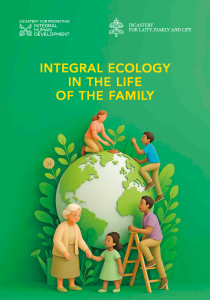
This is where the document stands out. It shows you how to live an integral ecology as a family:
- How to reduce waste, energy use, and consumption in simple ways
- How to raise children who respect creation and care for others
- How to make ethical decisions about money, food, and daily habits
- How to build a home culture rooted in gratitude, simplicity, and responsibility
In fact, each chapter moves beyond theory by offering reflection questions and specific actions—from starting a compost bin to rethinking spending habits to engaging in community life. It’s designed to be used, discussed, and lived—not just read.
The document also makes a bold but deeply practical claim: families are the starting point for real cultural change.
As highlighted in the overview, it proposes “concrete paths of reflection and suggestions on how to practice an integral ecology with the family in the leading role”. That means your household—your routines, your values, your choices—can shape not only your children, but society itself.
If you’ve ever wondered:
- Where do we even begin with living more sustainably as a family?
- How do we connect our faith with environmental responsibility?
- What can we realistically do that actually makes a difference?
This document is for you. Because integral ecology isn’t an abstract idea. It’s a way of life—and it begins at home.