Be Ambitious in Purpose, Humble in Steps: A Jesuit University Path Toward Sustainability
Posted October 23, 2025
We spoke with Cristina Alonso Alija, researcher and sustainability leader at IQS-URL-Universitat Ramon Llull Barcelona and within the Universidades y Centros Jesuitas de España (UNIJES) network. In this conversation, Cristina shares how integral ecology is being incorporated into university life, what lessons can be drawn from business management, and what concrete steps schools, parishes, and universities can take to develop their Laudato Si’ Plan.
At IQS-URL Barcelona and within the UNIJES ecosystem, how are you integrating integral ecology into university life?
UNIJES is made up of all Jesuit university centers in Spain. As part of our mission to advance the care of our Common Home, the UNIJES council decided to create the Reference Research Center (CIR) on Environment and Ecology. We seek to generate impact through research, education, and awareness to protect the planet and promote social development.
What we do: Working with more than 55,000 students in Spain, our impact multiplies in scale and over time, since today’s students will be tomorrow’s professionals in industry, public administration, academia, and the nonprofit sector. Forming both professionals and people is key. In research, our universities are advancing the frontiers of knowledge in key areas—from decarbonization engineering to socio-environmental justice.
How we do it: We ensure progress in sustainable operations across our institutions and connect this with student engagement by giving them space to participate in activities.
Our goals at the CIR for the 2025–26 academic year are ambitious: among others, we aim to increase the visibility of our research areas, our educational offerings in sustainability, and participatory events, while strengthening collaboration among centers and with other stakeholders.
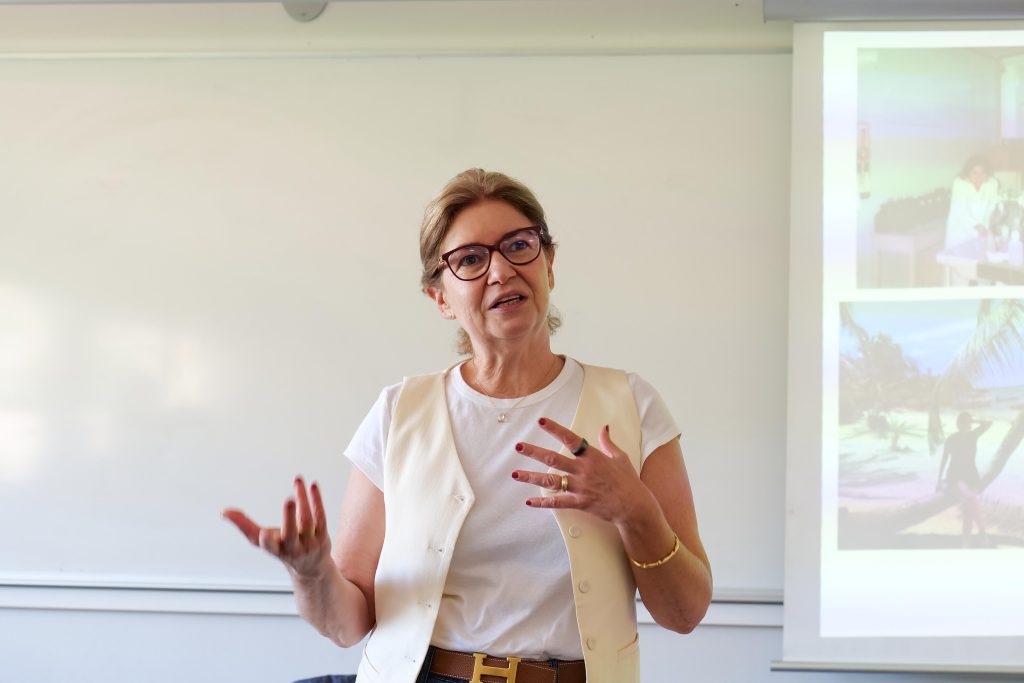
IQS-URL leads the UNIJES CIR on Environment and Ecology and has defined an ambitious agenda aimed at generating the greatest possible impact. Sustainability is an essential part of our strategic plan and permeates all our lines of action. Our initiatives range from the sustainable certification of laboratories and awareness campaigns for students to cutting-edge research in sustainable chemical processes, decarbonization, sustainability ethics, and responsible tourism.
My advice for universities starting out on this path is first to ask themselves where they can have the greatest impact and how their strengths can help. From there, set concrete goals—whether in educational offerings or student engagement—and then act, learn, and adapt. I encourage them to seek collaborations: together we can go further.
Can you share a recent practical example at IQS-URL Barcelona—a project, laboratory, or initiative that reduced environmental footprint, promoted circular economy, or advanced teaching innovation in sustainability? What problem did it solve, what indicators were used, and what results were achieved?
I’ll share two examples:
Sustainable laboratories: IQS-URL and its School of Engineering have nearly 1,000 laboratory workstations. We wanted to go beyond measuring and reducing our carbon footprint (which we already do). We launched a project to optimize laboratory activities in terms of environmental impact: energy, water, waste, purchasing, and green chemistry. As we improved processes, we also trained researchers in sustainable practices and involved them directly in proposing and implementing improvements. We are in the process of certification with My Green Lab, an external validator recognized by the UN Race to Zero campaign. It has been a fascinating process where we can demonstrate measurable reductions in water and energy use and waste generation, among other results.
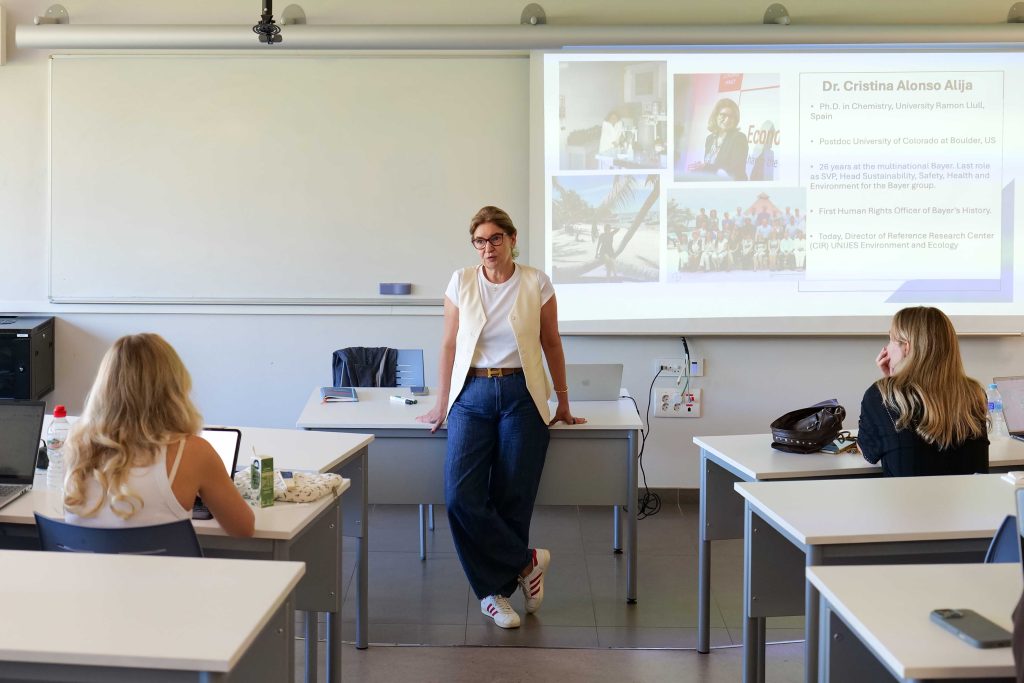
Mobility campaign: At IQS-URL we launched the awareness campaign “Mou-te pel canvi” (“Move for Change”). In its first edition, we combined training and gamification to collect data on mobility habits among students, staff, and faculty. We found that 80% of our students use public or sustainable transportation to attend classes. Hundreds of people actively participated and contributed improvement ideas. Based on their input, we created the Rodem carpooling platform. The prizes encouraged teamwork—for example, the winning class enjoyed a group lunch.
For the Laudato Si’ Platform audience: if a school, parish, or university wanted to start its Laudato Si’ Plan today, what would be the three most realistic actions for the next 90 days, and how would you suggest measuring them with simple metrics?
Be ambitious in purpose and humble in steps.
I recommend starting by asking where your greatest impact lies. Ask a small group from your community and listen carefully to their answers. Gather their input and identify two or three clear areas for action—write them down. As a metric, choose something simple, like counting how many groups have become involved.
Look for examples—and copy with pride. The Laudato Si’ Platform is an excellent way to connect with others who are further along the path and ask them to share their experience. Asking for help is positive, and many of us are happy to share.
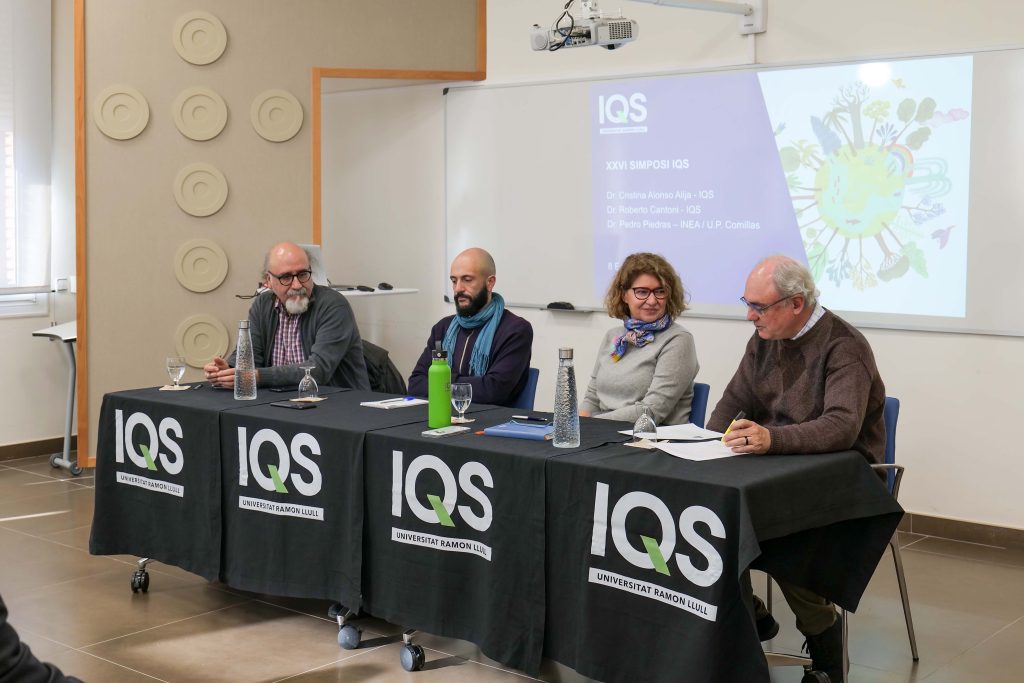
Define one or two projects with simple metrics. Think about scope. Depending on the type of institution, this could range from a food waste reduction project to an environmental education program or initiatives supporting vulnerable communities affected by climate change.
Tell your story. Celebrate your successes and learn from what doesn’t work. Progress happens step by step.
Looking to the future, what skills do students need to develop to lead sustainability in their professional fields? Think about technical skills, systems thinking, ethics, interdisciplinarity, and social dialogue. How can IQS-URL Barcelona form these profiles in a distinctive way?
We need professionals who are committed, generous, and reflective. Studying at a university is a privilege that comes with the responsibility to give back to society through service. We aim to form professionals who reflect on their role in society.
When it comes to skills, in our time the technical are as important as the human. Today’s complex problems require systems thinking, collaboration, and an ethical compass to make decisions in unprecedented situations. IQS-URL Barcelona, through its School of Engineering and School of Management, seeks to provide students with this kind of formation for all dimensions of their present and future lives.
Conclusion
Cristina Alonso’s testimony reminds us that sustainability is not an add-on, but an essential part of the university and ecclesial mission.
Now it’s your turn: log into your Laudato Si’ Platform dashboard and complete the steps toward the Laudato Si’ Certificate.
Every concrete action—no matter how small—adds up to the transformation our Common Home needs.